

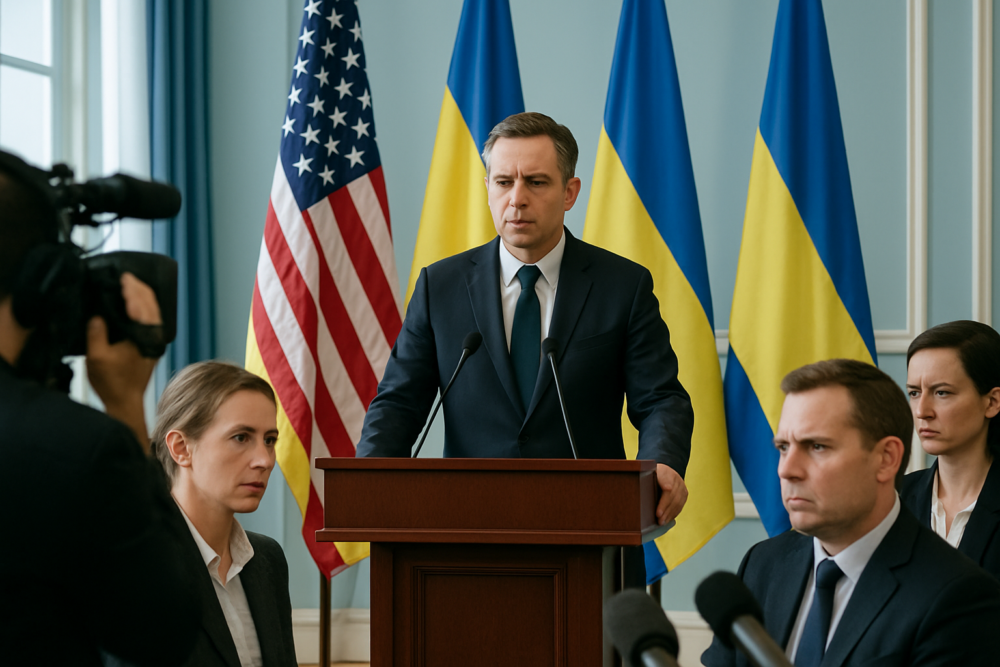
Opening Overview: Ukraine War Diplomacy and the Challenge of U.S. Political Rhetoric
The evolving conflict in Ukraine has not only defined European security policy but also become a flashpoint in American political discourse. In recent weeks, key statements from U.S. President Donald Trump (R) and Vice President JD Vance (R) have ignited controversy regarding America’s stance on the Ukraine-Russia war. Their comments have drawn pointed criticism from Ukrainian President Volodymyr Zelenskyy, who remains at the forefront of his country’s struggle for sovereignty and international support. These developments highlight a pivotal intersection between party-line policymaking in the United States and the urgent need for unified global action to confront Russian aggression. As both domestic and international stakeholders seek clarity, the question remains: can progressive, values-driven leadership in the U.S. provide the unity required to address one of the most consequential conflicts of our era?
Ukrainian President Volodymyr Zelenskyy’s recent public rebuke of high-ranking U.S. officials over their Ukraine war rhetoric reflects growing anxiety in Kyiv and among American allies in Europe. The controversy underscores how political narratives in Washington can have profound implications far beyond U.S. borders, influencing not just diplomatic relationships but also the material realities facing Ukraine’s embattled population.
“It’s painful to see Russian narratives gaining ground in the U.S.—people forget who the aggressor is,” President Zelenskyy said in an interview, lamenting the shift in American discourse.
The tension centers on comments by both President Trump and Vice President Vance, which critics argue echo Kremlin talking points. As Ukraine faces repeated Russian missile strikes, the stakes of American rhetoric and support could not be higher for democracy advocates and the international system.
Main Narrative: Heated Exchanges and the Impact on U.S.-Ukraine Relations
In February, during a tense high-level meeting, Ukrainian President Volodymyr Zelenskyy directly challenged Vice President JD Vance to witness the devastation wreaked by Russian forces in Ukraine. Vance declined, dismissing such visits as little more than “propaganda tours.” The exchange, reported widely, intensified scrutiny on the U.S. administration’s posture toward Ukraine and raised questions about the future of transatlantic solidarity.
At the heart of the dispute are statements from President Donald Trump (R), who has controversially suggested that Ukraine bears partial responsibility for the ongoing conflict. Trump’s assertion—”when you start a war, you gotta know you can win a war”—implies that Ukraine provoked a conflict against a much stronger adversary, a position widely condemned as aligning with Kremlin narratives. Following a Russian missile attack that claimed civilian lives, Trump went so far as to call the strike a “mistake,” using the tragedy to disparage Ukraine’s repeated appeals for military assistance—a move that further alienated Ukrainian officials and supporters worldwide.
Vice President Vance (R), on his part, has articulated skepticism about existing U.S. aid strategies and encouraged greater security investment from European NATO allies. Yet, his framing—emphasizing the need to “understand both sides” and warning against further public criticism of President Trump by President Zelenskyy—has fueled perceptions that the U.S. is retreating from its long-standing support for Ukraine’s sovereignty. According to a recent interview, Zelenskyy accused Vance of “somehow justifying Putin’s actions,” suggesting that Russia’s narrative is making dangerous inroads into the American political mainstream.
White House sources confirmed that, in a recent Oval Office encounter, both Trump and Vance pressed Zelenskyy on showing “more gratitude” for U.S. support, even as they advocated a ceasefire plan that would compel Kyiv to make territorial concessions to Russia.
This “Trump-Vance plan” has come under sharp criticism. As reported by Ukrainian and European media, Zelenskyy characterized the proposal as a betrayal of Ukraine’s national interests, warning it would require Ukraine to cede sovereignty and recognize disputed regions under Russian control—a move seen by many as undermining the very foundations of international law. The plan would, among other measures, lift major U.S. sanctions on Moscow and accept Russia’s annexation of Crimea. Such proposals have prompted alarm among not only Ukrainian officials, but progressive U.S. lawmakers and transatlantic allies who view them as a retreat from core democratic values and commitments. As reported recently, these overtures from Trump and Vance have catalyzed new divisions within U.S. policymaking circles and complicated Ukrainian efforts to shore up international aid.
Contextual Background: The Stakes for Democracy, Policy Precedents, and Pathways Forward
To understand the stakes, it is essential to revisit the roots of current U.S.-Ukraine policy. Since Russia’s 2014 occupation of Crimea and its broader invasion in 2022, bipartisan American support for Ukraine had been seen as a bulwark against authoritarian expansionism and in defense of international order. Progressives and centrists alike championed military and economic assistance as vital tools to deter further Russian aggression and support a sovereign democracy in Eastern Europe.
That support, once robust, is now under threat as partisan divides deepen over the future course of U.S. foreign policy. The emerging “Trump-Vance plan”—offering a peace deal that critics argue would effectively surrender Ukrainian sovereignty in exchange for an uncertain cessation of hostilities—presents a sharp break with previous U.S. commitments. As described in an in-depth analysis, acceptance of such a proposal could legitimize territorial aggression and embolden autocrats worldwide.
“There’s a real danger in sending signals that the U.S. will abandon its allies and reward brute force,” said a senior policy analyst, drawing on lessons from the late 1930s appeasement of authoritarian regimes.
Despite these challenges, many in the U.S. Congress, along with advocacy groups and international partners, continue to press for principled engagement. The fact that Zelenskyy has sharply criticized the proposed concessions illustrates the dangers of transactional diplomacy divorced from core values. Furthermore, Vice President Vance’s warning to Zelenskyy—against criticizing Trump publicly, lest Kyiv risk losing American support—affirms that the stakes go beyond battlefield tactics to encompass the health of democratic alliances. As documented by the Anadolu Agency, such cautionary rhetoric only amplifies Kyiv’s sense of diplomatic isolation.
History has shown that American engagement—when rooted in solidarity and a commitment to democratic principles—can turn the tide of global crises. While current political signals are mixed, advocates for Ukrainian sovereignty remain steadfast, and civil society in both nations continues to demand a values-driven foreign policy. As debate continues, every voice calling for principled leadership and collective action contributes to the ongoing search for peace grounded in justice and international law.