

Climate Change Enters Uncharted Territory: WMO’s 2024 Record Highlights Stakes for Global Policy
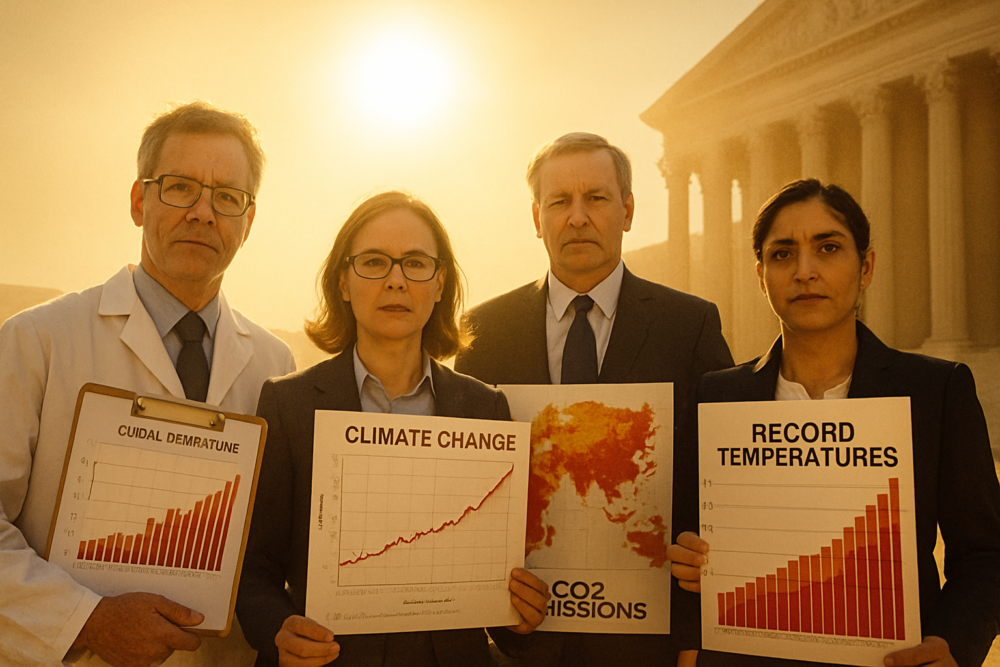
With climate change keywords such as “record global temperatures,” “human-induced climate change milestones,” and “alarming carbon dioxide levels” now dominating international headlines, the latest findings from the World Meteorological Organization (WMO) underscore both the urgency of the crisis and the opportunities for meaningful action. The WMO has confirmed that 2024 is the first full calendar year in which global mean surface air temperature exceeded 1.5°C above pre-industrial levels, marking an unprecedented milestone in humanity’s struggle with climate instability. This finding is not merely symbolic—it carries profound consequences for ecosystems, communities, and the predictability of weather systems around the world. In addition, the WMO’s report warns that the rapid acceleration of sea level rise is already being felt, threatening coastal habitats and millions of lives.
Environmental advocates, scientists, and progressive leaders have consistently raised concerns about inaction or half-measures from governments. These new records intensify the debate: What mix of mitigation, adaptation, and investment is required to steer the planet away from catastrophic warming? The world’s largest economies, notably the United States and the United Kingdom, now face not just scientific realities but also mounting moral and political imperatives to act boldly. In 2024, the global mean surface air temperature was 1.54°C above pre-industrial levels, making it the warmest year on record (source). This is not a distant threat; it’s a present emergency.
“We’re entering new climate territory at a frightening speed. Each tenth of a degree increase above 1.5°C is more than just a number—it spells exponentially greater risks for food security, water availability, and disaster response,” emphasized Dr. Leena Jansen, a climate scientist unaffiliated with the report.
Furthermore, the WMO report highlights carbon dioxide concentrations have reached 420 ppm—the highest in 800,000 years (source), and glaciers experienced the largest recorded annual mass loss in 2023 (source). These developments paint a clear picture: unchecked emissions and continued reliance on fossil fuels are overturning the very parameters that have made civilization possible for millennia.
Policy Battles and Legal Hurdles: Climate Action in the Crosshairs
As the world absorbs these troubling climate milestones, the focus is shifting toward the key battleground of climate policy—specifically, how progressive climate action collides with political resistance and legal entanglements in the United States and abroad. U.S. District Judge Tanya Chutkan (Democrat) recently issued a temporary restraining order that blocked the Environmental Protection Agency (EPA) from terminating $20 billion in climate grants awarded to various nonprofit organizations under the Biden administration (source). This controversial ruling has touched off a firestorm, with critics raising fears of judicial activism and concerns over accountability for how climate funds are distributed and monitored.
The EPA’s halted action was premised on allegations of financial mismanagement and potential fraud among some recipient organizations. However, the judge determined the EPA’s claims lacked sufficient evidence at this stage, creating a legal bottleneck as the courts sort out the intersection of environmental urgency and regulatory due process (source). This episode stands as a vivid example of how legal and bureaucratic barriers can stifle or delay transformative climate efforts—particularly when the allocation of resources becomes a partisan flashpoint.
“The climate crisis isn’t waiting for our court system to catch up,” argued Sierra Club policy director Ana Bradley. “We need funds reaching communities, frontline organizations, and innovators—not stuck in red tape or political grandstanding.”
Meanwhile, on the other side of the Atlantic, the United Kingdom’s Advanced Research & Invention Agency (ARIA) recently earmarked £81 million for research on climate tipping points. While this marks a significant financial commitment, scientific stakeholders have challenged the government’s framing of this spending as an ‘early-warning system,’ cautioning it risks oversimplifying the multifaceted nature of climate thresholds. Despite differences over messaging, the concept of preparing for and averting climate tipping points aligns with increasing calls for international collaboration and knowledge-sharing to bolster resilience efforts.
Across both continents, the race against climate inertia is hindered not just by stubborn political divides, but by structural limitations within government agencies, courts, and funding mechanisms. The need for clear, equitable, and accountable funding—directed toward the communities most at risk and the solutions most likely to yield scalable results—has never been greater.
Historical Context and Pathways Forward: Learning from the Past, Innovating for the Future
To understand how we arrived at this pivotal crossroads, it’s important to recognize both the remarkable progress and persistent challenges in global climate policy over the past decades. The Intergovernmental Panel on Climate Change (IPCC) has long warned that surpassing the 1.5°C threshold risks unleashing irreversible climate impacts—ranging from mass extinctions to runaway sea level rise. Now, the world faces the consequences of slow, incremental efforts that have lagged behind the pace of scientific warnings.
Yet hope persists. Bold legislative achievements such as the Inflation Reduction Act under President Joe Biden (Democrat) have injected historic levels of funding into clean energy, emissions reduction, and climate resilience projects. Internationally, the Paris Agreement and subsequent COP summits have fostered a sense of shared commitment, albeit one tested by opposing interests and uneven progress. In countries like Germany and Denmark, aggressive investments in renewables and community-based adaptation have yielded both emissions cuts and improved public well-being—offering templates for scalable action.
In his new book, ‘Risk and Resilience in the Era of Climate Change,’ economist Vinod Thomas insists, “Mitigation and adaptation are not optional add-ons—they are the foundation for safeguarding our societies.”
The rising tide of youth activism, grassroots organizing, and science-driven advocacy continues to build momentum for solutions grounded in justice, equity, and innovation. At the same time, the ongoing debate over climate grant oversight and legal disputes in the United States demonstrates the importance of integrating robust oversight mechanisms and transparency into all climate-related funding and programs. By ensuring accountability, public trust can be maintained, and the spoils of sustainable progress shared equitably.
Looking forward, the path to climate stability will require a combination of regulatory innovation, international solidarity, and community-powered solutions. Whether through new climate finance strategies, transformative infrastructure investment, or more inclusive governance, every action—no matter how modest—brings society closer to a safer, fairer, and more sustainable planet.