

White House Portrait Changes Ignite Debate About Traditions, Presidential Legacies, and Symbolism
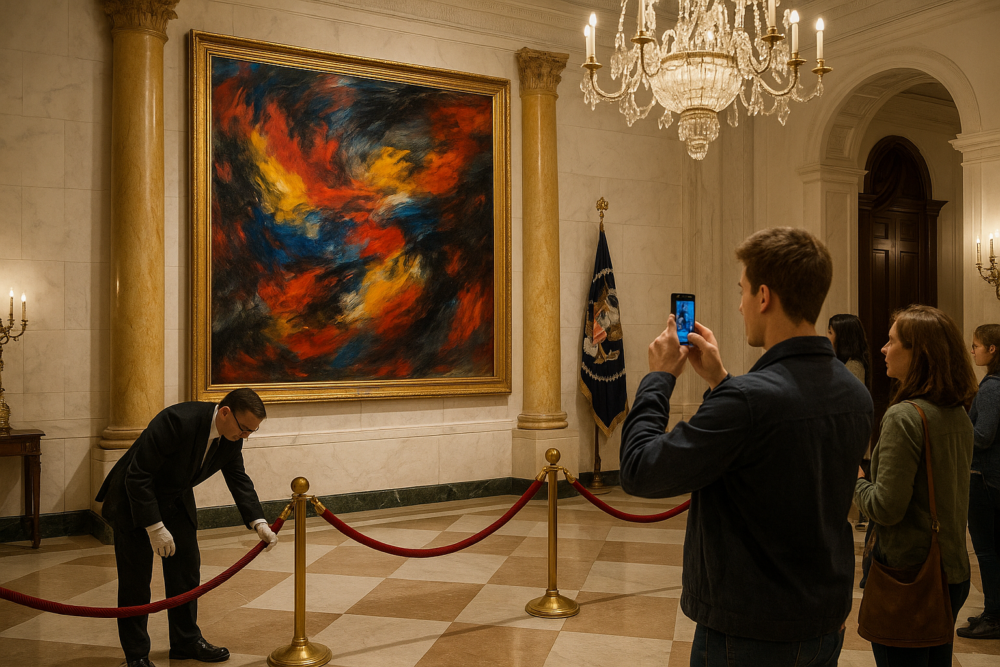
The recent decision to reposition presidential portraits in the White House Grand Foyer has become a flashpoint in the ongoing national discussion about history, symbolism, and the projection of power. At the heart of the controversy is the replacement of former President Barack Obama’s portrait with a newly commissioned painting of President Donald Trump (Republican), depicting the dramatic aftermath of the July 2024 assassination attempt in Butler, Pennsylvania. The move breaks a longstanding tradition of displaying the two most recent presidents’ portraits together in the most prominent entryway of the residence. Instead, Obama’s portrait has been relocated to the State Floor’s entrance hall, while George W. Bush’s now hangs beside his father’s. The Trump painting — inspired by widely publicized press photographs — was hung with little ceremony, yet it has quickly become an emblem for the charged political climate, sparking both passionate approval and intense critique.
What makes this change especially notable is the painting’s subject: Trump, bloodied but unbowed, fist raised in defiance after the attempt on his life — a moment that captured national attention and became a rallying image among his supporters. According to the Financial Times, the July 2024 incident involved Thomas Matthew Crooks firing eight rounds from an AR-15-style rifle, grazing Trump’s ear and killing one spectator while several others were seriously wounded. This act, and Trump’s subsequent public appearances, have only deepened the partisan divide when it comes to presidential symbolism and narrative control.
From the perspective of many White House observers, the shift is about more than art or aesthetics: it is a statement of intent and identity. Rather than a neutral celebration of democratic succession, the rearrangement is perceived by some as an assertion of Trump’s ongoing rivalry with his predecessor and a bid to redefine the story told in America’s most public home. As one museum professional put it:
“The Grand Foyer has always been about continuity — a visual handshake between eras. To see that handshake replaced by a clenched fist will resonate for years to come.”
Even as debate rages, this episode reminds Americans of the power of national spaces and the profound impact that seemingly small curatorial choices can have on the country’s sense of collective memory. That impact is compounded by the secrecy that has surrounded the new Trump painting — the artist’s identity remains unconfirmed, and no public explanation has been given for the commission or its costs. The hush around these decisions has sparked fresh calls for transparency and public input in managing the nation’s artistic and historical legacy.
Reshuffling History: Motivations, Power Plays, and Public Reaction to the New Trump Portrait
The installation of the new Trump portrait goes beyond personal pride or self-commemoration. It is part of a broader pattern that has defined Trump’s presidency and post-presidency: the personalizing of public institutions and the foregrounding of spectacle. According to the Associated Press, Trump’s return to executive power in April 2025 saw the White House undergo considerable changes, from new flagpoles to an overhaul of the Oval Office, and the addition of several self-portraits throughout the residence — not just in public spaces but in private ones as well. This latest portrait, commemorating the Butler rally attack, fits into a pattern of reconfiguring public narratives to focus on his own story and trials.
The painting’s powerful iconography — a visibly injured Trump standing tall and defiant — is not just a tribute to personal resilience but an invitation to see the presidency through the lens of martyrdom and combat. In partisan America, the move has drawn sharply divided responses. Supporters have hailed it as an authentic representation of Trump’s ordeal, a symbol of survival, and a rightful assertion of his legacy. Critics, however, view it as a politicized spectacle that diminishes the idea of presidential succession and bipartisan continuity.
This act of artistic re-centering is also reminiscent of earlier episodes. During his first term in office, Trump (Republican) made headlines by shifting or removing portraits of recent predecessors, prioritizing his own preferences and reshaping the visual narrative of the presidency.
“People come to the White House expecting to see the flow of American leadership, not a statement of personal grievance,” said a historian familiar with White House traditions. “These moves risk turning the People’s House into a personal trophy room.”
Compounding the controversy are unresolved questions about the painting’s commission. The artist’s identity has not been officially confirmed, and there are no details on whether public or private funds financed the work. These unanswered questions have fueled speculation and intensifying calls for more robust oversight of how White House heritage is curated. Yet even as frustration simmers, the episode has galvanized conversations about the need for greater public participation in decisions that shape the country’s historical memory — a progressive value emphasizing accountability, inclusion, and democratic stewardship.
Tradition Meets Transformation: Contextualizing White House Portrait Swaps and Their Implications for American Democracy
The tradition of displaying recent presidential portraits in the White House Grand Foyer dates back decades, designed to embody the peaceful transfer of power and the evolving story of American leadership. It is meant to be a nonpartisan gesture, a visual affirmation that each presidency builds on those before it. The change made this year — displacing Obama’s (Democrat) portrait in favor of Trump’s (Republican) — stands as one of the most visible departures from that ethos in modern memory.
This move comes amid a period of deep polarization, in which national symbols are increasingly contested and every gesture is freighted with political meaning. The Obama portrait, painted by Robert McCurdy, is widely regarded as an emblem of cool modernity and progressivism, while the new Trump painting substitutes a sense of drama and confrontation. As reported by The Guardian, Trump has capitalized on his survival by casting himself as a target of political enemies and using the visual of his recovery as a rallying cry.
Portrait swaps are not unprecedented, but the manner and messaging surrounding this episode are unique. Past presidents have sometimes altered the placement of artwork to reflect changing tastes or celebratory moments. However, the acute politicization and secrecy now on display signal a deeper contest over the meaning of the presidency, the White House, and the American story itself.
“Traditions matter because they tell us who we are and who we hope to be,” observed a former White House curator. “If those traditions are bent too far for temporary advantage, everyone loses the thread.”
This episode underscores a critical tension: the need to respect historical precedent while remaining open to transformation and the voices of the current era. For progressives, the controversy is a clarion call for renewed commitment to transparency, public engagement, and the kind of stewardship that honors all Americans’ stories. By demanding accountability and dialogue, advocates hope to ensure the People’s House remains a testament to collective, not just personal, achievement.