

Operation Midnight Hammer: US Strikes and Growing Tensions in the Middle East
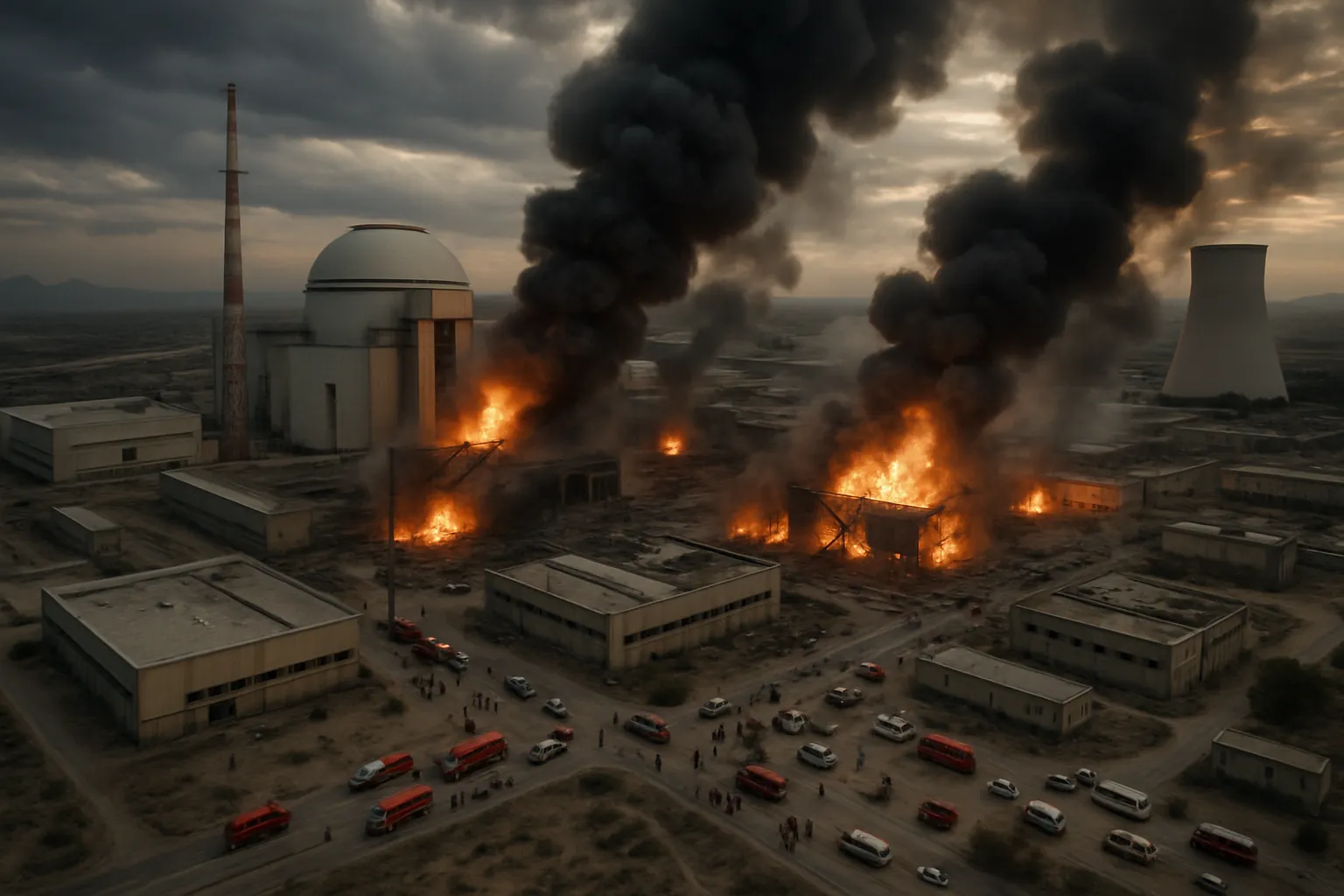
The United States’ recent military operation, code-named Operation Midnight Hammer, has thrust US-Iran relations—and the wider Middle East—into a period of profound uncertainty. In a move President Donald Trump (Republican) described as a necessary step to halt Iran’s nuclear ambitions, seven B-2 stealth bombers, supported by a formidable array of 125 warplanes, warships, and submarines, struck three major Iranian nuclear sites: Fordow, Natanz, and Isfahan. The Fordow complex, deeply embedded in mountain rock, was believed by many to be nearly impervious to attack. Yet, according to US officials, the bombardment caused unprecedented underground damage to the core of Iran’s nuclear infrastructure.
International monitors from the International Atomic Energy Agency (IAEA) confirmed that entrances to underground tunnels and critical infrastructure had indeed been targeted. Satellite imagery has since corroborated substantial physical damage, though the broader consequences for Iran’s nuclear program remain under review. In the aftermath, Iran has condemned the attacks as a grave violation of sovereignty, vowing swift reconstruction and resumption of nuclear activities, while reserving the right to retaliate.
President Trump has insisted these strikes are not a declaration of war, but a signal that the US remains committed to nonproliferation and regional security. He warned that any Iranian retaliation could prompt further US action, stoking fears of escalation across an already volatile region. This large-scale show of force—launching as many as 75 precision-guided weapons within a brief 25-minute window—marks an unprecedented level of operational coordination and technical prowess, with both the military and diplomatic ramifications still unfolding.
“The Fordow nuclear site was deeply embedded into the rock, its roof well below ground level, but we’ve achieved significant underground damage,” Trump stated to reporters after the operation, underscoring the message of American resolve.
Meanwhile, neighboring nations and global actors are urging restraint, with India explicitly denying claims circulating on social media that US bombers utilized its airspace. According to NDTV, major Indian airlines have begun avoiding Iranian airspace altogether, highlighting the regional ripple effects as governments and companies brace for potential fallout.
Behind the Strike: Coordination, Secrecy, and a New Era of US Military Power Projection
The details emerging from Operation Midnight Hammer reveal a meticulously planned mission designed to maximize both surprise and military effectiveness. US Air Force B-2 stealth bombers took off from Whiteman Air Force Base in Kansas and flew for nearly 18 hours, requiring multiple mid-air refuelings. The bombers operated in near total radio silence, accompanied by a decoy force moving in an opposite direction—a complex maneuver that exemplifies the precision and sophistication of modern US air operations.
These flying-wing bombers, lacking a traditional tail or fuselage, require highly skilled pilots and an array of automated systems for long-haul missions. Amenities such as a onboard toilet, refrigerator, and microwave are built in to support missions of this magnitude, underscoring the demanding nature of such sorties. General Daniel Caine, who helped oversee the operation, highlighted the “incredible complexity and precise synchronization” required to coordinate B-2s, fighter escorts, and refueling tankers across contested airspace with minimal communication.
Adding to the strategic calculus, at least six B-2 stealth bombers were deployed to Diego Garcia, a remote US-controlled island in the Indian Ocean approximately 2,400 miles from Iran’s coast. As reported by India Today, this deployment was widely viewed as a clear signal to Iran—and the world—about US readiness and reach.
The operation’s secrecy was reinforced by a tightly timed rendezvous of bombers, support aircraft, and refueling planes in a narrow corridor of international airspace, conducted with a level of coordination that US officials say has set a new standard for stealth strike missions.
“The complexity of bringing together multiple aircraft types, in radio silence, over a small window of airspace, can’t be overstated,” said General Caine, reflecting on the mission’s logistics.
These efforts were not isolated. In recent weeks, the region has witnessed a severe escalation, including an Israeli strike on dozens of Iranian facilities, demonstrating the growing willingness of regional powers to use force to address security concerns. The synchronization between these actions is raising concern among international observers about the risks of inadvertent escalation or miscalculation—a reminder of the fragile balance that exists in the region.
From Fordow to Natanz: Historical Backdrop, International Response, and the Quest for Lasting Stability
The roots of this conflict run deep. Tensions over Iran’s nuclear ambitions have simmered for decades, frequently erupting into diplomatic crises or covert operations. The Natanz Nuclear Facility has long been at the center of international scrutiny, particularly after suffering major damage at the outset of the Iran-Israel war. On June 13, 2025, Israeli forces reportedly targeted dozens of Iranian sites, including Natanz, with over 200 jets dropping more than 330 munitions on about 100 locations, as documented here. These actions culminated in the destruction of sensitive infrastructure, such as the multi-story Pilot Fuel Enrichment Plant, which housed 1,700 advanced gas centrifuges—visible damage that international satellites readily confirmed. The recent American strike builds on this pattern, representing a dramatic escalation but also a continuation of long-running efforts to limit Iran’s nuclear capabilities.
The international response has largely called for a return to diplomacy, recognizing that military action alone cannot deliver a durable solution. The strikes have prompted calls for restraint from European leaders, the United Nations, and even some voices within the US Congress, who argue that engagement and dialogue remain essential tools for reducing risks and moving toward peaceful outcomes. Progressive policymakers and advocacy groups have emphasized that security is ultimately rooted in justice, transparency, and ongoing negotiation—not just displays of military might.
“We urge all parties to step back from the brink. Military escalation risks catastrophic consequences for regional and global security,” a spokesperson for the UN stated during an emergency session in New York.
Even as the world assesses the fallout, the flight paths of commercial aircraft are shifting in real time. Airlines are rerouting flights to avoid Iranian airspace—a move confirmed by NDTV—as nations and companies prioritize safety and stability while diplomatic channels work overtime. These dramatic developments recall earlier episodes in which US-Iran tensions threatened to spiral, such as the withdrawal of the US from the Joint Comprehensive Plan of Action (JCPOA) in 2018 and the tit-for-tat attacks that followed. Yet, the determination of civil society, international organizations, and communities advocating for peace continues to serve as a counterweight to the politics of confrontation.
While challenges remain formidable, history shows that collective action, sustained advocacy, and open diplomatic channels can lay the groundwork for de-escalation and, ultimately, progress. By learning from the past and centering dialogue in policy debates, there is hope for a region—and a world—striving for a more secure and equitable future for all.