

Opening Overview: Trump’s Tariffs and Global Trade Volatility
The global trade system is currently weathering a period of instability as a direct result of President Donald Trump (Republican)’s sweeping tariff policies. This aggressive approach—championed as a means to reshore American manufacturing—has sent shockwaves through financial markets, triggered retaliatory measures by key trading partners like China, and heightened concerns over a looming recession. The landscape for U.S. businesses and workers alike is now marked by unpredictability and complexity, as once-stable supply chains and economic alliances are upended.
Recent developments have underscored the volatility inherent in Trump’s tariff strategy. His so-called ‘Liberation Day’ announcement imposed new duties with little warning, prompting panicked selloffs in the Dow Jones and other indices. Meanwhile, a temporary 90-day pause for many countries did little to stem the chaos, with steep tariffs on Chinese imports remaining in place and drawing swift counter-tariffs from Beijing. The financial risks are concrete: market experts warn that wavering policies threaten to derail investment and consumer confidence, two pillars of sustainable economic growth.
The International Monetary Fund (IMF) publicly urged global leaders to address these surging trade tensions, warning that businesses are holding back on investment and consumers are tightening their belts, a scenario that could have ripple effects across the globe. According to the IMF, the unpredictable and confrontational nature of U.S. trade policy under Trump is already stalling growth and undermining trust in the stability of the global economic order (read more).
With tariffs now at their highest average rate since the 1940s and globalization trends facing a sharp reversal, families and business owners alike are bracing for an era of higher prices and diminished access to affordable goods.
While advocates of the tariffs argue that these measures could protect critical industries and restore domestic jobs, the overwhelming reaction from markets and international partners points to a deepening crisis that may demand coordinated, pragmatic solutions—rooted in dialogue, fair competition, and global cooperation.
Main Narrative: Market Chaos, Retaliation, and Policy Response
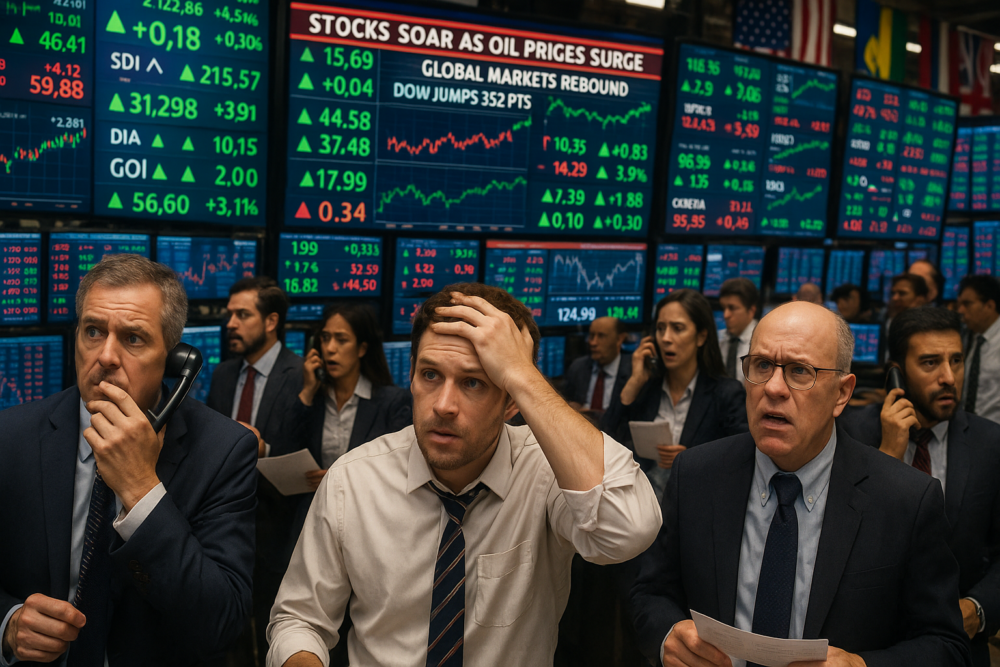
The immediate aftermath of President Trump’s tariff measures has been defined by uncertainty, as businesses and financial markets scramble to adapt. The administration’s pattern of abrupt announcements—followed by partial pauses and sudden reimpositions—has created a confusing policy environment. In one dramatic instance, the Dow Jones industrial average plunged by over 1,000 points following an unexpected pause announcement, only to swing wildly again days later when tariff threats resurfaced.
The United States’ average tariff rate now hovers near 20%, a dramatic leap from the sub-3% rate that prevailed before Trump’s inauguration. This represents a reversal of decades of economic integration, a trend that had long helped keep consumer prices low and fostered international goodwill.
According to an analysis by the Financial Times, these erratic U.S. trade policies are eroding America’s historical influence and strategic leverage in the world economy, raising concerns that Washington’s approaches could isolate the country from key allies and emerging markets (source).
Meanwhile, the trade war with China is escalating at a pace few could have anticipated. Tariffs on Chinese goods have soared to an unprecedented 145%, with China retaliating by placing duties as high as 125% on U.S. exports. Treasury Secretary Scott Bessent (Republican) acknowledged the unsustainable nature of this high-tariff standoff, and President Trump himself has recently hinted at the possibility of a “softening” in the trade war in the face of persistent recession fears (read more).
Industry experts point out that these tariffs have already driven up costs for U.S. manufacturers and consumers, with everyday items—from clothing to smartphones—now more expensive than ever.
Multinational corporations and small businesses alike find themselves caught between rising input costs and shrinking markets. The global shipping industry, a bellwether of trade health, is also feeling the strain; maritime forecasting firm Drewry predicts a 1% drop in container port volumes this year due to Trump’s policies, an event only seen three other times since 1979 (details here).
While Treasury Secretary Bessent has advocated for clearer, less chaotic policy signals to calm markets and facilitate productive negotiations, the administration’s actions have often been at odds with these calls for stability. Ongoing talks with more than 50 nations offer a glimmer of hope, but skepticism remains high, particularly regarding prospects for a comprehensive agreement with China. As noted by Reuters, previous efforts to hammer out a U.S.-China trade deal have repeatedly faltered, and the complexities of both commercial and geopolitical disagreements continue to stand in the way of resolution (sources).
Contextual Background: Policy Precedents, Broader Consequences, and Progressive Pathways Forward
The current tariff crisis did not emerge in a vacuum. The roots stretch back to the first Trump administration, when sweeping tariffs on steel and aluminum—justified under the banner of national security—were imposed on allies and rivals alike. The World Trade Organization ultimately ruled that Trump’s use of national security to justify these levies was a violation of global trade frameworks (details), further straining America’s credibility on the world stage.
Repeated cycles of protectionism throughout U.S. history—going back to the Smoot-Hawley Tariff Act of the 1930s—have often precipitated more harm than good, fueling retaliation, reducing exports, and compounding economic downturns. The present turbulence echoes these patterns, with working families and small business owners poised to bear the brunt unless more collaborative strategies take hold.
As the world’s largest economy, America’s decisions set the tone for global commerce, and erratic leadership can undermine decades of collective progress in poverty reduction and affordable consumer access.
Progressive economists and political leaders are now calling for a reset: one that strengthens domestic industry without sacrificing global partnerships or driving up household costs. Solutions could include targeted investments in advanced manufacturing, robust worker retraining programs, and renewed multilateral negotiations with both allies and rivals—an agenda that would marry economic revival with fairness and sustainability.
While President Trump (Republican) and his supporters continue to frame tariff escalation as a matter of national pride and economic necessity, the mounting evidence underscores the need for policy approaches grounded in clear rules, partnership, and long-term vision. The coming months will test the ability of U.S. leaders to shift course toward inclusive growth, global cooperation, and a trading system that works for all.