

Opening Overview: Trump’s Kennedy Center Appearance and Protests Signal Broader Battle for Artistic Freedom
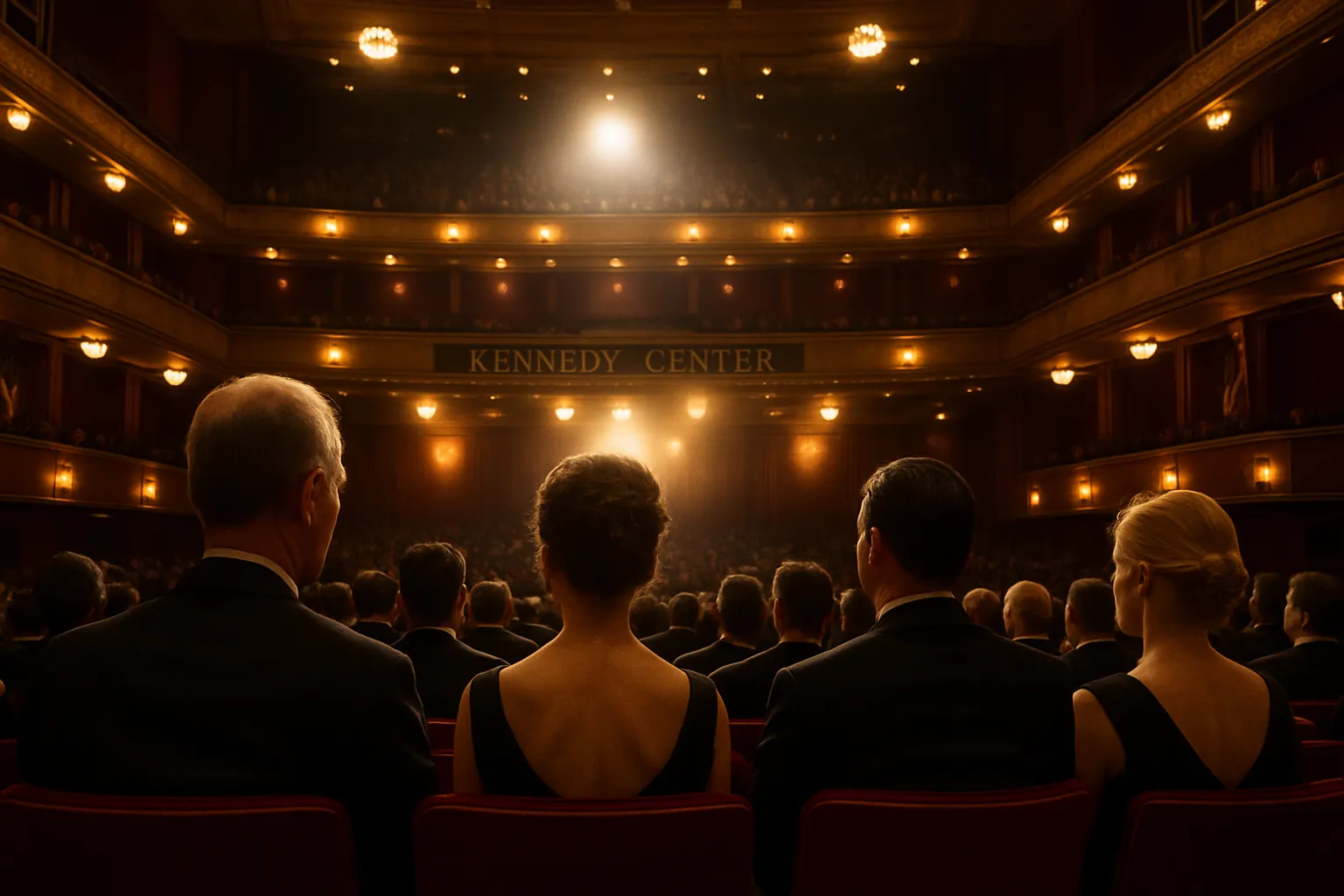
The clash over cultural and political direction at the Kennedy Center reached a boiling point on the opening night of “Les Misérables,” as President Donald Trump (R) and First Lady Melania Trump were greeted by a divided audience. The event, headlined by an American classic known for its themes of resistance and social justice, drew both cheers and boos, while protests ignited outside the venue. Trump’s attendance marked his first visit since unilaterally appointing himself chairman and overhauling the center’s leadership with his political allies. Many in the arts community interpreted this move as the latest salvo in his administration’s effort to reshape both programming and governance in line with a more conservative vision, according to AP News.
The polarized reaction underscored growing anxieties about artistic freedom and the future of cultural institutions in the United States. For Trump’s supporters, the evening showcased a bold reassertion of American tradition; for critics, it represented an erosion of the arts as a space for pluralistic expression. The moment became emblematic of the sharp divides growing throughout the nation’s public spaces.
“There’s a reason ‘Les Misérables’ has always resonated – it stands for the voices of protest, for dignity in the face of authority. Seeing the president preside over that story, amid renewed efforts to restrict dialogue in the arts, brought those themes uncomfortably close to home,” shared one protest organizer outside the Kennedy Center.
In the crowd, the schism was visible: supporters chanted “USA,” while others booed or joined the demonstrations outside. The presence and applause for a group of drag queens, in direct response to Trump’s prior criticism of drag-related performances at the center, highlighted the vibrant resistance from the LGBTQ+ community and allies. This juxtaposition between cheers and jeers, protest and pageantry, set the stage for an evening that would reverberate far beyond its final curtain.
Main Narrative: Cultural Institutions Under Pressure Amid Political Restructuring at the Kennedy Center
Since assuming control of the Kennedy Center, Trump (R) has moved quickly and decisively, replacing its board of trustees with close political associates—including his chief of staff Susie Wiles and Usha Vance, wife of Vice President JD Vance (R). The abrupt dismissal of Biden-era members and firing of the center’s longstanding president, Deborah F. Rutter, sent shockwaves through the arts community. Critics say these decisions have fueled cancellation of major performances, artist resignations, and a drop in subscriptions, while raising alarm about the future of artistic independence (AP News reports).
The opening night of “Les Misérables”—with its story of rebellion and moral courage—became a flashpoint for these conflicts. Protesters gathered outside, some clad in revolutionary costume, while inside, artists themselves joined the demonstration: several cast members reportedly skipped the performance in solidarity with those objecting to the new direction. The stark contrast between the ovation for drag performers and the jeers directed at Trump left no doubt about the mounting tensions.
One attendee remarked, “When the drag queens walked in, they got a standing ovation. When the president did, it was a chorus of boos. You could feel the culture war playing out row by row.”
Trump (R), when pressed about the protests and reshaping of the center, dismissed concerns: “I couldn’t care less. All I do is run the country well,” he told reporters—a response viewed by many as brushing aside legitimate anxieties in the artistic community. Meanwhile, Vice President JD Vance (R) became the subject of ridicule for jokingly confusing “Les Misérables” with the much darker “Sweeney Todd.” The misstep underscored perceptions of disconnect between the new administration and the values inherent to much of the center’s repertoire—values of dialogue, dissent, and belonging.
Governor Gavin Newsom (D-CA) took to social media to highlight the irony of Trump (R) attending a show devoted to justice and rebellion given the administration’s recent efforts to consolidate control and restrict funding for the arts. The episode, amplified by a viral video capturing the audience’s clashing reactions, is being discussed widely as a symbol of the ongoing battle over the meaning and purpose of American cultural life in 2025.
Contextual Background: Politicization of the Arts and the Fight for Public Space
The Kennedy Center has long stood as a nonpartisan beacon for American art and culture. Its mission—to elevate voices from across the social and political spectrum—has, historically, made it a target during periods of national discord. In recent decades, the center has weathered threats to federal funding and public debate over the boundaries of artistic expression. Trump’s (R) latest moves, however, represent an unprecedented level of direct political intervention, with profound implications for both governance and programming (AP News).
Since 2024, the administration has pushed to cut or eliminate federal arts support, targeting not only the Kennedy Center but also the National Endowment for the Arts, the National Endowment for the Humanities, and the Smithsonian Institution. These proposals have drawn criticism from a broad array of artists, educators, and lawmakers, who argue that public investment in the arts supports not only creativity but also economic vitality and civic cohesion.
As one former Kennedy Center consultant observed, “The arts have survived wars, recessions, and censorship. This is a new kind of challenge—one where the question isn’t only about funding, but about whether our shared spaces for artistic expression will remain truly open and democratic.”
The resignation of artists and consultants, cancellations of shows like “Hamilton,” and declining subscriptions all point to a broader retreat from the values of inclusivity and experimentation that have defined the Kennedy Center through much of its history. For many, the events surrounding the “Les Misérables” opening night serve as a microcosm of the current conflict—between those seeking to narrow the definition of national culture and those determined to keep it expansive, plural, and progressive.
The stakes of this moment stretch far beyond the Kennedy Center’s marble halls. They reach into classrooms, community theaters, and living rooms across the country, wherever people look to the arts as both a mirror and a map for envisioning a more just future. Progressives and advocates for artistic freedom remain committed to defending these spaces, believing that, with collective effort, the arts can once again serve as a source of unity and inspiration.