

Overview: Trump’s Trade War Tactics and the 25% Automobile Tariff—A High-Stakes Gamble
With trade policy front and center in the run-up to the 2026 election season, President Donald Trump (Republican) has once again thrust tariffs into the spotlight. His administration’s latest move: a sweeping 25% tariff on imported automobiles and select auto parts, a dramatic escalation that, according to the White House, is aimed at safeguarding the U.S. automotive industry and American jobs. Speaking to reporters, Trump dismissed the criticism that his policies are inconsistent or damaging, instead describing his approach as a calculated negotiation tactic—deliberately setting tariffs high, only to dial back or extend exemptions during talks with major partners like the EU, China, and India.
For progressive observers, Trump’s shifting stance reveals deeper questions about tariffs as a tool in the modern global economy and the balance between protecting domestic industries and the real-world cost to American families. The administration asserts that these moves will bolster the U.S. economy, but critics argue the evidence points to significant increases in consumer costs and volatility in international relationships.
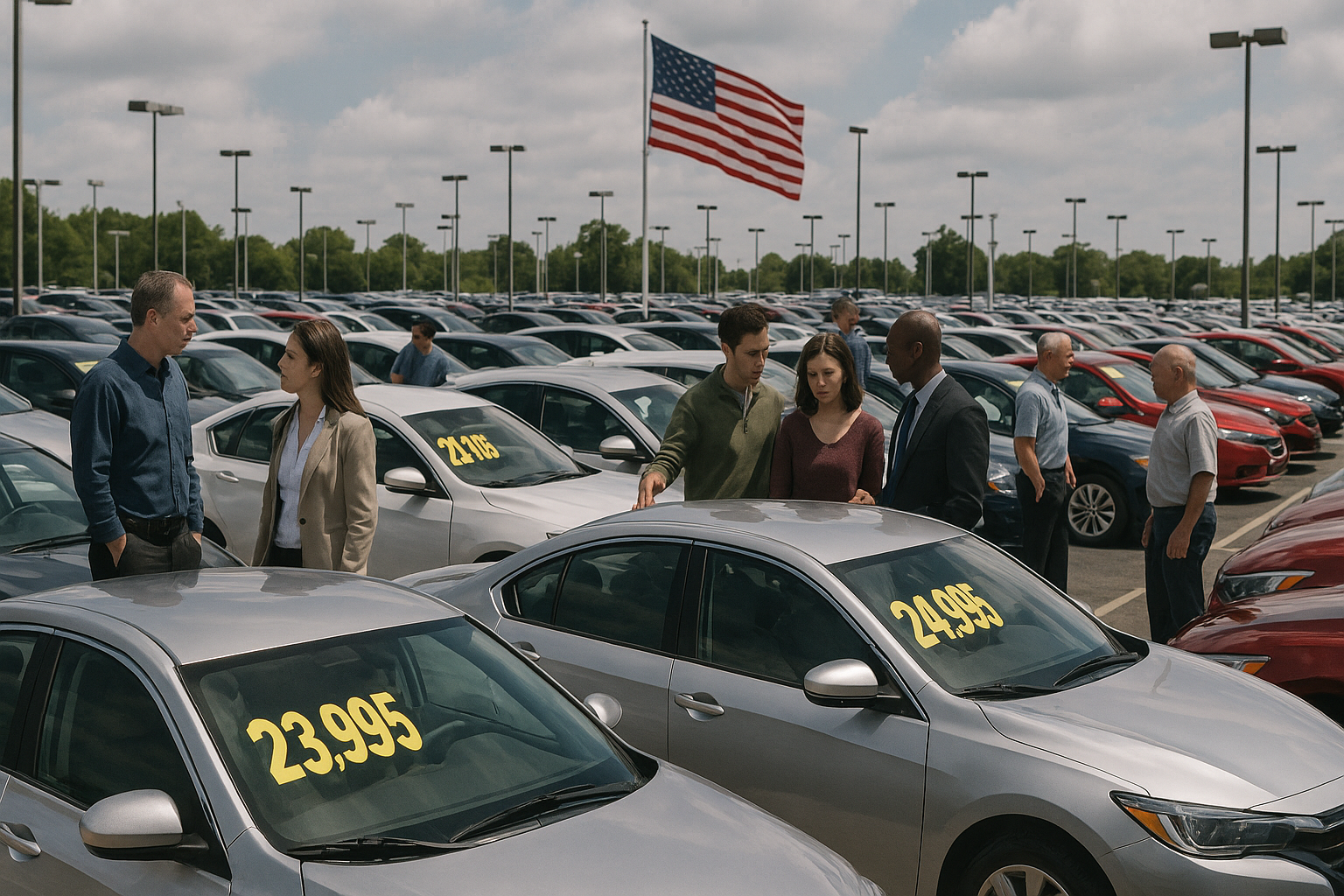
Trump’s new 25% tariff order—announced under the banner of national security—has already raised anxieties across the auto sector, given that the price tag for many vehicles could soar by as much as $10,000, with ripple effects throughout the supply chain.
This new round of tariffs—followed by a series of exemptions and a volley of threats toward companies like Apple and Samsung—has also sent shock waves through the markets and reignited debates over the administration’s economic strategy. While Trump maintains that these shifts reflect nimble deal-making, the reality is far more complex, with implications for workers, families, and America’s standing on the global stage.
Main Narrative: High Tariffs, Sudden Shifts, and Political Calculations
Trump’s tariff policies have oscillated rapidly over 2025, culminating in the March 26 announcement of a 25% duty on imported automobiles. Citing the need to protect national security and American manufacturing, the administration projected the tariffs could raise as much as $100 billion annually in tax revenue, according to estimates promoted by the White House (Business Standard, March 27, 2025).
But for many consumers and industry observers, the reality is alarming. Economists warn that the price of new vehicles could climb by an average of $10,000, putting car ownership even further out of reach for middle- and working-class Americans—contradicting a core pledge of the Trump administration to ease household financial burdens (CNN Business, Feb. 19, 2025). Major automakers like Ford, GM, and foreign-based firms with U.S. plants may be forced to pass those costs on to consumers, cut corners, or even slash jobs in response to higher parts costs and supply chain disruptions.
Trump’s defenders argue that these dramatic measures are only an opening bid. The White House has implied—behind closed doors and in select interviews—that the initial tariff threat is meant to force trade partners to the negotiating table, a strategy explicitly confirmed by Trump during a May press event (AP News, May 29, 2025). EU and Indian negotiators have acknowledged feeling significant pressure to accelerate discussions on issues such as semiconductor cooperation, steel, and agricultural tariffs in the wake of Trump’s threats, with some progress announced but no comprehensive agreements yet.
Critics, including Democrats in Congress and consumer advocacy groups, have lambasted the inconsistency and unpredictability of Trump’s ‘deal-first’ approach: “He pummels our allies with sweeping tariffs, then arbitrarily exempts certain sectors when the pressure mounts or the market reacts. That’s not a strategy—it’s chaos,” one progressive senator remarked.
The most pointed market feedback has come in the form of the ‘TACO’ meme—‘Trump Always Chickens Out’—spread by traders and analysts reacting to Trump’s high profile threats followed by frequent walk-backs, sparking waves of volatility for companies like Apple and Nvidia. Trump’s threat to impose a 25% tariff on Apple unless it moved iPhone production to the U.S.—and a subsequent, similar threat targeting Samsung—fueled further uncertainty before being quietly deferred as global supply chain realities set in.
Contextual Background: Tariffs, Trade, and American Economic Progress—A Progressive Lens
Historically, tariffs have been a double-edged sword in American policy—a tool to promote nascent industries and protect jobs, but also a blunt instrument that can stifle trade, increase costs for consumers, and lead to tit-for-tat retaliation. Trump’s approach stands out for its unpredictability, the scale of the threats, and the frequency of reversals. The administration’s use of ‘national security’ as justification for auto tariffs echoes Cold War-era policies, but today’s globalized auto supply chain complicates the picture. Nearly half of all vehicles sold in the U.S. contain major parts sourced from abroad (KPBS Public Media, March 26, 2025).
The stakes are not just economic but social. Progressive advocates highlight the burden that higher car prices will place on working-class families, especially those in rural and suburban areas who lack robust public transit options. Labor unions remain divided—some leadership supports aggressive measures to promote U.S. jobs, while rank-and-file members and allied advocacy groups warn that volatile policy swings actually endanger long-term manufacturing employment and the wages of American workers.
“We know that protectionism alone isn’t the answer. True progress requires investing in education, innovation, sustainable manufacturing, and labor rights—not just shaking up the global chessboard,” said a spokesperson for the Economic Policy Institute.
Legal challenges have rapidly emerged. In late May, a U.S. trade court ruled that Trump had exceeded his constitutional authority by imposing broad tariffs on imports, effectively blocking a host of recent orders (Reuters, May 28, 2025). The administration is expected to appeal, but the decision exposes the tenuous legal and constitutional footing on which much of Trump’s trade agenda rests.
Far from the rhetoric of ‘America First,’ this high-stakes tariff experiment has reignited an important debate: how can the U.S. protect workers, rebuild manufacturing, and compete globally without punishing families and risking retaliation that could hurt exporters and farmers? Progressive economists and lawmakers continue to advocate for comprehensive industrial policy—one that invests in education, green jobs, and smart trade agreements to ensure America’s economic future is both prosperous and equitable. Despite the turbulence, there remains hope that with pressure from communities, smart legislative action, and robust public debate, a more sustainable path forward can be forged.