

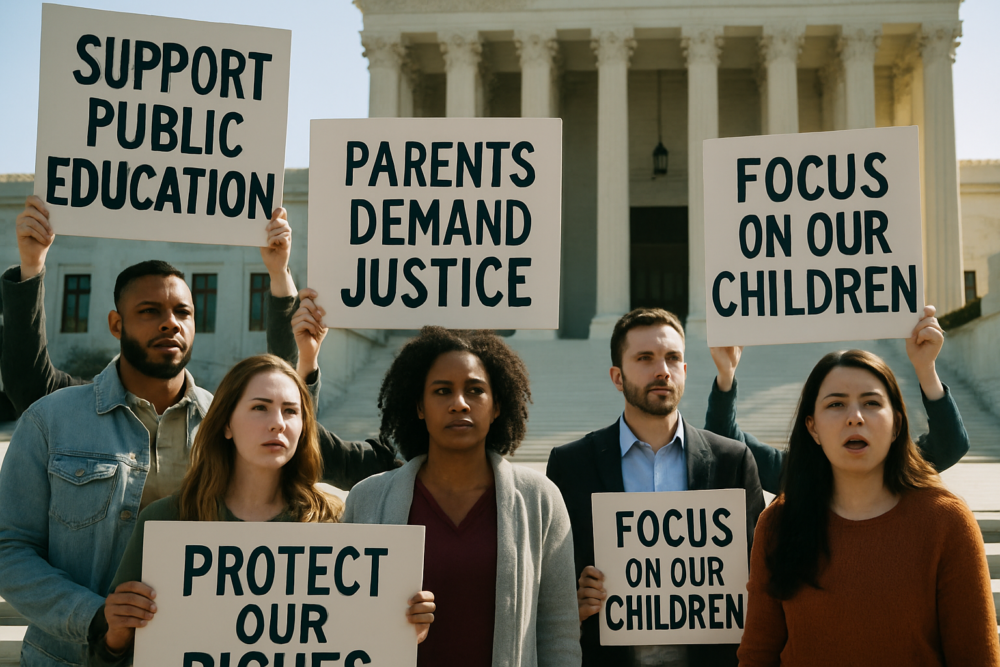
Supreme Court Hears Landmark LGBTQ+ Opt-Out Case: Parental Rights and Inclusive Curriculum Under Scrutiny
A high-profile debate over LGBTQ+ content in public schools reached the U.S. Supreme Court this week, as justices weighed whether religious parents in Montgomery County, Maryland, should have the right to exclude their children from elementary classroom lessons and story times that feature LGBTQ+ characters or themes. The case, igniting controversy across the nation, crystallizes a larger conversation about balancing religious liberty, parental rights, and the urgent need for inclusive education in a diverse society—key long-tail keywords for this moment are “Supreme Court LGBTQ+ opt-out,” “parental rights in school curriculum,” and “inclusive education policy.”
At the heart of the case is the Montgomery County school board’s previous opt-out policy, which allowed families to excuse their children from LGBTQ+ book readings and classroom discussions when requested for religious reasons. The board ultimately discontinued this policy, citing growing administrative burdens and, crucially, a concern that formal opt-outs could stigmatize LGBTQ+ students. Now, as arguments unfold in the Supreme Court, the decision could establish a powerful precedent, potentially impacting how districts nationwide strike the careful balance between safeguarding religious freedom and advancing LGBTQ+ inclusion.
Montgomery County’s shift away from opt-outs came after educators and advocates emphasized that full participation is fundamental to fostering an environment where every child feels seen and valued. Yet, religious parents argue they are entitled to be notified in advance when these lessons occur, empowering them to make choices consistent with their faith.
“Exposure to diverse stories, including those featuring LGBTQ+ characters, is vital for all children to see themselves reflected in lessons and to foster acceptance and understanding,” noted Dr. Taylor Richardson, Atlanta Public Schools’ 2023-2024 Teacher of the Year, encapsulating the perspective of many education professionals.
Observation from the justices during oral argument revealed divergent viewpoints. Justice Samuel Alito (R) questioned, “What’s the big deal about allowing families to opt out of LGBTQ books?” His remarks highlight the ongoing judicial debate over the practicality and broader societal consequences of opt-outs.
Inside the Supreme Court: Justices Signal Openness to Religious Freedom Claims in LGBTQ+ Curriculum Dispute
The current Supreme Court makeup has a well-documented track record of rulings that bolster religious liberty, raising the stakes for advocates of both sides in this consequential case. Several justices’ lines of questioning during oral arguments appeared sympathetic to the parents’ complaints, hinting at a possible extension of religious freedom jurisprudence into the sphere of public education content.
The plaintiffs in the Montgomery County case, representing a coalition of religiously observant families, are not asking for a ban on LGBTQ+ books in schools. Rather, they demand the right to opt their children out of such readings and discussions, and to be given advance notice when lessons are planned so that families can make informed, faith-aligned decisions. This request reflects a growing trend among conservative and religious communities nationwide, who see parental control as a bulwark against what they perceive as an encroachment on their moral authority.
From the perspective of progressive educators and many LGBTQ+ advocates, these opt-outs are not a benign accommodation. There’s concern that permitting individual absences from lessons about LGBTQ+ identities sends an exclusionary message to queer students—and may undermine broader efforts to create welcoming, equitable learning environments. The Montgomery County school board, for its part, maintains that the opt-out policy became an administrative quagmire, complicating lesson planning and inadvertently heightening stigma against already marginalized students.
At issue is whether accommodating religious beliefs can come at the expense of policies designed to promote diversity, acceptance, and equal dignity for LGBTQ+ youth within the public school system.
“We want all students to learn about and respect diversity, not only to reflect their lived experiences but to cultivate compassion and understanding for those whose experiences differ from their own,” remarked an advocate from a national LGBTQ+ education coalition.
Many school districts and education professionals worry that a ruling favoring expanded opt-out rights could embolden efforts to roll back hard-won progress on inclusive curriculum nationwide. They emphasize the importance of shared community responsibility in ensuring that classrooms reflect and support all children, regardless of their family background or identity. As this debate plays out on a national stage, consensus remains elusive—but the potential for precedent-setting change is undeniable.
Historical and Policy Context: LGBTQ+ Inclusion, Parental Rights, and the Road Ahead
The issues at play in the Montgomery County case are rooted in a long and evolving history of public education policy, religious accommodation, and LGBTQ+ inclusion battles. For decades, American schools have served as a microcosm of larger social debates, from the teaching of evolution to the integration of civil rights and now, the representation of LGBTQ+ people in curriculum.
Maryland, like many states, has taken steps to ensure its curriculum is representative of the state’s diversity. LGBTQ+ inclusion in lessons is not merely about visibility, but about fostering empathy and reducing bullying, which remains a significant risk for LGBTQ+ youth nationwide. Research has consistently found that students in more inclusive school environments report greater well-being and academic success—while those who lack such representation or acceptance face higher rates of mental health challenges. Thus, the drive to maintain inclusive curriculum is grounded in both educational philosophy and public health evidence.
Parental rights, meanwhile, have been central to Supreme Court jurisprudence for over a century. Landmark decisions such as Pierce v. Society of Sisters and Wisconsin v. Yoder recognized the fundamental role of families in guiding their children’s upbringing—yet those rulings have always been balanced against the state’s interest in ensuring equal access to education and protection from harm. The current case reflects a new inflection point: will the court reaffirm or recalibrate that balance in the context of contemporary cultural and social realities?
The outcome will almost certainly reverberate beyond Montgomery County, shaping how schools across the country approach diversity, equity, and the boundaries of parental control.
“Every Supreme Court decision in this realm echoes down into classrooms, shaping the lived experiences of millions of children and families,” observed a constitutional law scholar following the proceedings.
Regardless of the ruling—expected by the end of June—the public conversation it has generated already underscores the urgent need for continued dialogue and thoughtful compromise. The stakes are high: for LGBTQ+ students seeking acceptance, for religious families striving to live according to their beliefs, and for educators seeking clarity and support as they navigate these complex, deeply personal topics.
The progressive movement has long championed both the rights of marginalized communities and the importance of pluralism in public life. As this case illustrates, the real challenge lies in ensuring that policies and practices respect both goals without sacrificing the dignity or well-being of any group. While the path forward is uncertain, the national engagement sparked by this case is itself a testament to the value of civic participation and collective problem-solving.