

Supreme Court Decision on State-Led Climate Change Lawsuits: A New Era for Environmental Accountability
This week marked a pivotal development in the ongoing legal struggle over climate change accountability as the U.S. Supreme Court declined to intervene in a major legal clash between Republican and Democratic-led states. The heart of the dispute is whether states like California and New Jersey can continue their lawsuits against oil giants, which they accuse of downplaying the real risks of fossil fuel emissions and their direct contribution to the global climate crisis. The Supreme Court’s refusal to hear the case, announced on March 10, 2025, leaves these significant climate lawsuits in the hands of state courts — a noteworthy advance for those advocating for local oversight and community-driven climate solutions.
For nearly a decade, cities and states have brought legal action against fossil fuel companies, alleging years of intentional deception about climate change science. These lawsuits assert that, for too long, oil companies have misled the public and policymakers, resulting in exacerbated environmental and economic damages. Now, the Supreme Court’s action creates an opening for these arguments to be addressed on their merits, resisting attempts by the energy industry, and their political allies, to shift the cases into friendlier federal forums. According to Reuters, on March 10, 2025, the Court’s decision signals faith in state-level democratic processes as a means to pursue justice and redress for climate-related harms.
The Supreme Court’s refusal to block these cases reflects a measured recognition of state sovereignty in tackling the climate crisis. Yet, the path ahead is not without complexities. The dissenting opinions from Justices Clarence Thomas and Samuel Alito highlight the enduring tension between state and federal authority — a dynamic that will likely influence the contours of climate litigation for years to come. “The proper forum for resolving disputes involving state authority and constitutional questions should not be so easily bypassed,” wrote Justice Thomas, emphasizing his belief that the high court should have weighed in.
“If these lawsuits are allowed to proceed, they could dictate the nation’s energy policy through judicial means, bypassing both Congress and the Executive,” warned the dissenting justices, echoing concerns raised by Republican-led states.
Despite such warnings, the majority of justices appear to have recognized the fundamental role that states play in protecting public health, local economies, and the environment against corporate misconduct. The Court’s action does not end the lawsuits — it allows them to proceed for full consideration, potentially setting new precedents for how climate change accountability is litigated across the country.
Main Narrative: Republican-Led States, Big Oil, and the Escalating Climate Lawsuit Battle
The Supreme Court’s decision comes in the midst of an intensifying legal and political battle over the future of U.S. climate and energy policy. Nineteen Republican-led states, marshaled by Alabama’s Attorney General, sought to block the climate-related lawsuits of their Democratic counterparts, arguing that such cases risk imposing “ruinous liability and coercive remedies” on the energy sector. They warned that letting hundreds of local lawsuits shape national policy could disrupt economic stability and energy prices for all Americans. As AP News reports, the Republican states contended that national energy policy should not be determined one courtroom at a time, but through coordinated federal action.
At the center of the Democratic-led lawsuits is a powerful assertion: Oil companies have knowingly misled consumers and regulators about the catastrophic potential of fossil fuel emissions. As California Governor Gavin Newsom (Democrat) recently declared, “For more than 50 years, Big Oil has been lying to us.” The legal filings accuse oil majors of mounting deceptive campaigns that have delayed urgent action, worsening the real-world impacts of climate change — from wildfires and floods to soaring insurance costs and public health emergencies.
Despite strong industry efforts to remove these cases to federal court where they might find a friendlier audience, state courts will now have the first say according to AP News. This is a crucial development, as community-level courts can prioritize local needs, environmental justice, and public health in a manner that may not always be reflected in federal proceedings.
“This is about holding those who profited while the planet was burning accountable at the level closest to the people harmed,” said one environmental justice advocate following the ruling.
The implications for Big Oil are significant: The lawsuits could yield massive financial penalties, mandates for public education about climate risks, and requirements for meaningful emissions reductions. For progressive policymakers and advocates, the Supreme Court’s stance is a promising signal that the legal system can serve as a check on corporate influence — and a vehicle for advancing climate justice.
Historical and Policy Context: The Fight for Local Authority in U.S. Climate Regulation
Efforts to hold the fossil fuel industry accountable in court are not new. Across the past two decades, cities and states have experimented with legal tactics to recover costs tied to climate-driven natural disasters and public health crises. But oil companies have consistently argued that only Congress and federal agencies have the authority to regulate emissions and assign blame for global warming’s destructive toll. The Supreme Court’s latest decision, documented by Reuters, signals a judicial reluctance to preempt state innovation and leadership.
These state lawsuits — and the fights over where they are heard — reflect a broader tension over the nation’s direction on climate policy. Progressive legal experts point out that, for much of American history, states have played a crucial role as “laboratories of democracy.” Landmark regulatory frameworks, from environmental protection statutes to public health ordinances, often began as state or municipal initiatives. In the absence of sweeping federal climate action, these local suits may help fill the policy vacuum and inspire broader reforms.
“State courts are uniquely positioned to address the harms faced by real communities — not just abstract legal questions,” said a constitutional law professor familiar with climate litigation trends.
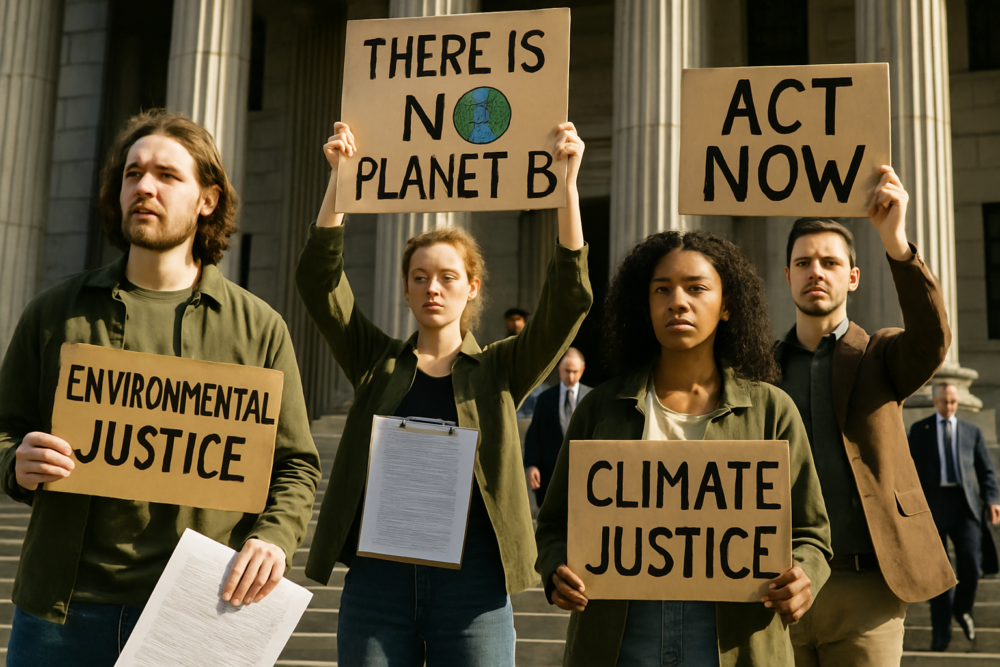
For many activists, the Supreme Court’s refusal to block state actions underscores the value of local democracy and represents a rare victory for communities seeking to put people and planet over profits. Still, these lawsuits alone won’t resolve the United States’ climate crisis. Far-reaching progress will require a combination of strong local legal action, robust federal policy, and collective engagement. The decision, however, gives hope that no single industry or political faction can indefinitely obstruct meaningful climate accountability, especially when communities rally together and persevere.