

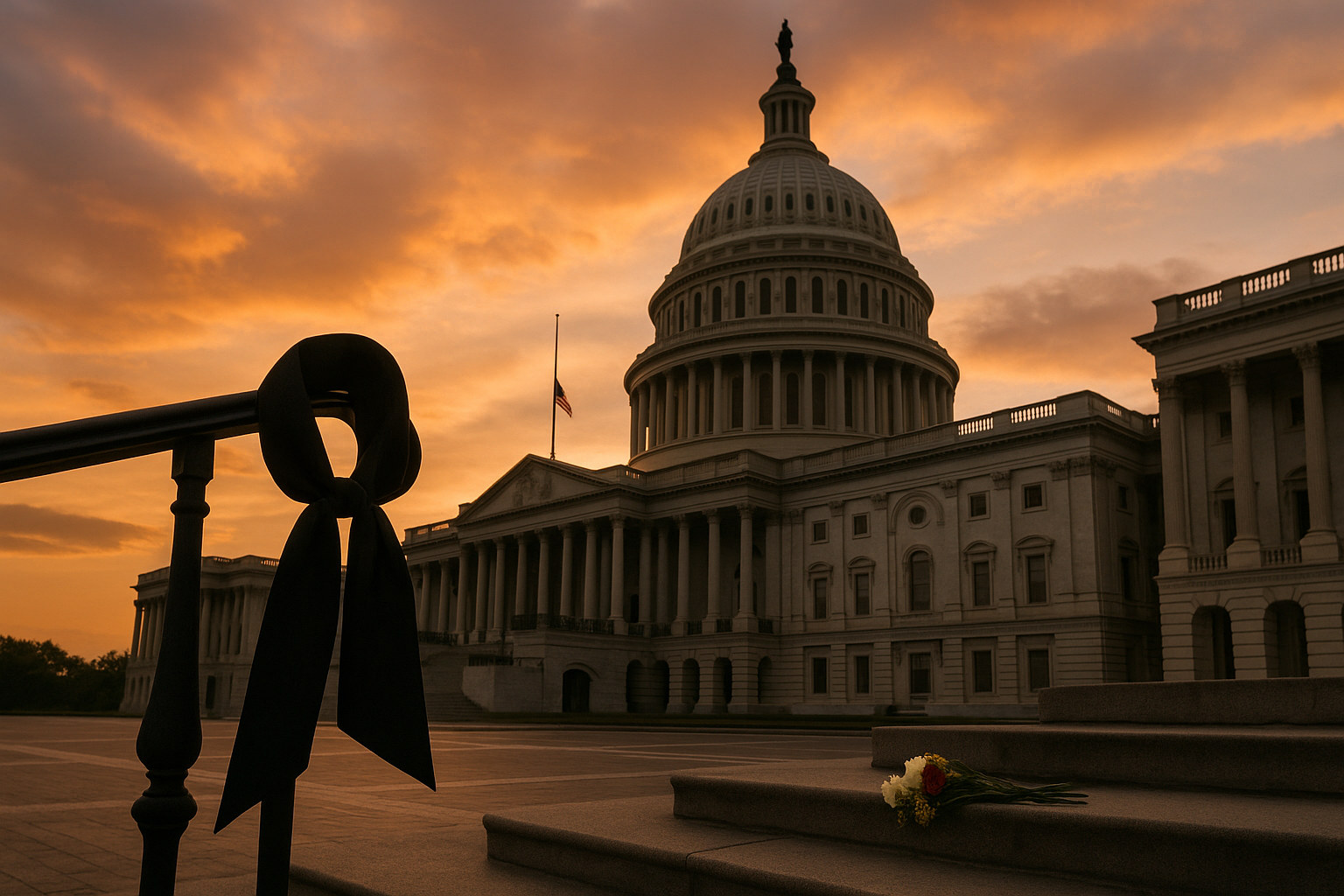
Loss of a Champion: Rep. Gerry Connolly’s Passing and the House Democratic Balance
Amid the growing political challenges and razor-thin margins in Congress, the passing of Rep. Gerry Connolly (D-VA) at age 75 is being felt far beyond the halls of government. Connolly, a stalwart defender of democratic institutions and a widely respected figure within the Democratic Party, died after a renewed battle with esophageal cancer, further impacting the already delicate partisan balance in the House of Representatives. His death follows the losses of two other Democratic members earlier in the year, amplifying the pressure on the party’s ability to advance progressive legislative priorities. Connolly’s long career, marked by dedication to public service and local advocacy, became a template for the values of community building and mentorship that many believed essential for the future of Democratic politics in Northern Virginia and beyond. He was not only the ranking member of the House Oversight Committee but also a tireless advocate for a more inclusive and effective government. As tributes pour in, a somber, unified message emerges: Connolly’s absence will be deeply felt in policy debates, party leadership, and the communities he championed.
“He taught us all to bloom where we are planted,” his family shared in a statement, referencing Connolly’s guiding ethos and the legacy he leaves in every corner of Northern Virginia.
Connolly’s career in Congress began in 2009, shaped by prior leadership as chairman of the Fairfax County Board of Supervisors, and he quickly gained a reputation for both legislative expertise and personal kindness. His efforts to strengthen government transparency, support federal workers, and invest in vital local infrastructure—such as the Silver Line Metro—made him a favorite among both constituents and colleagues. According to Axios, Connolly’s resilience in the face of illness was matched by his determination to ensure that critical policies continued to support democracy and working families. In April, acknowledging the return of his cancer, Connolly announced plans not to seek another term and stepped down as the Oversight Committee’s lead Democrat, ensuring a thoughtful transition in leadership. The response from across the Commonwealth has been heartfelt: U.S. Senators Tim Kaine (D-VA) and Mark R. Warner (D-VA) recognized his “unyielding toughness,” while local leaders praised his mentorship and commitment to progressive ideals.
His death marks the third Democratic congressman to die in office in recent months, further narrowing the Democratic margin in the House, according to Reuters. As the House majority tilts further toward Republican hands, the progressive movement faces new urgency to defend hard-won advances in healthcare, environmental priorities, and workers’ rights. Yet, the collaborative energy and can-do optimism that Connolly modeled in life remain essential assets for Democrats and all those who value inclusive, effective governance.
Leadership, Mentorship, and Legacy: Connolly’s Enduring Mark on Virginia Politics
From his earliest days as a staffer on the U.S. Senate Committee on Foreign Relations in the 1980s to his transformative tenure in Congress, Gerry Connolly’s public service career was anchored by a commitment to both principled leadership and grassroots empowerment. Northern Virginia’s evolution into one of the nation’s most dynamic and diverse regions is, in part, a reflection of Connolly’s vision and advocacy. During his time as chair of the Fairfax County Board of Supervisors, he was instrumental in securing funding for community assets like the Silver Line Metro extension to Dulles International Airport, according to The Washington Post. Landmarks such as the Oakton Library and a host of local parks also bear his imprint, physically manifesting his belief in the enduring value of public investment.
Rep. Suhas Subramanyam (D-VA) described Connolly as “a community builder who believed fiercely in lifting up the next generation,” while local activists credit him with giving many their first opportunities to participate in public life.
This emphasis on nurturing future leaders earned Connolly a reputation for mentorship unrivaled among peers. Stories abound of young organizers, government staffers, and policy advocates who recall his personal encouragement and practical advice—qualities that ensured a consistent renewal of progressive energy within the Democratic Party. Connolly was also a vocal advocate for federal workers in a region shaped by government employment, pushing for fair wages, stronger benefits, and clear accountability. As the ranking member of the House Oversight Committee, he helped steer major reforms in transparency and ethical standards, giving voice to the everyday concerns of working families. His ability to bridge local and national priorities—whether by supporting environmental measures or defending the independence of federal agencies—made him indispensable in both Fairfax County and the wider Democratic caucus.
Colleagues have highlighted how his transition out of leadership was handled with characteristic thoughtfulness. As outlined by The Washington Post, Connolly’s decision to step down in April 2025 reflected both personal courage and a deep sense of responsibility to his constituents and party.
“Gerry was always thinking about the next step for the community rather than himself. He showed what real public service looks like,” said a former aide.
The breadth of tributes—to his policy acumen, kindness, and inclusivity—reflects a legacy that extends far beyond legislative accomplishment. The values and networks he created will likely steer Northern Virginia’s political future for years to come.
Historical Context and Broader Implications for U.S. House Power
The impact of Rep. Gerry Connolly’s passing extends beyond the borders of his district or the Commonwealth of Virginia. As noted in recent reporting, the 119th Congress has witnessed an unprecedented number of Democratic losses due to illness and untimely deaths, leading to a tangible shift in the House’s partisan balance. This shift arrives at a moment of profound national debate, when the direction of key policies—from voting rights to environmental protection—may hinge on just a handful of votes. The immediate consequence is an emboldened Republican majority, raising fresh questions about the prospects for progressive legislation and oversight in the months ahead. Historical precedent reminds us that periods of narrow partisan margins often generate both risk and opportunity: while gridlock can increase, the possibility for bipartisan deals and creative policy solutions also emerges under increased public scrutiny.
The Associated Press reported that Connolly was known for his advocacy for federal workers, government reforms, and environmental initiatives, as well as his legislative skill and mentorship of young leaders.
As Democrats and progressives regroup, much attention now turns to the process of filling Connolly’s seat and sustaining his vision of inclusive, forward-looking governance. The special election to replace him will no doubt serve as a bellwether for Democratic organizing power and the evolving priorities of a region that has played a crucial role in national elections. In the meantime, community organizations, local government partners, and advocacy coalitions are stepping up to ensure that ongoing projects—from public transit expansion to social equity efforts—remain a priority. The strength of Connolly’s coalition, built through years of community engagement and legislative achievement, will play a vital role in sustaining momentum for progress despite the uncertainty ahead.
Connolly’s approach—a careful blend of principled leadership and pragmatic coalition-building—offers lessons for policymakers nationwide. His legacy is not simply measured in votes or committee gavel time, but in the living projects, relationships, and networks he cultivated, all testaments to the power of collective action in American democracy. The challenge now is for those inspired by his example to redouble their efforts, ensuring that hope, equity, and community remain central to the nation’s political future.