

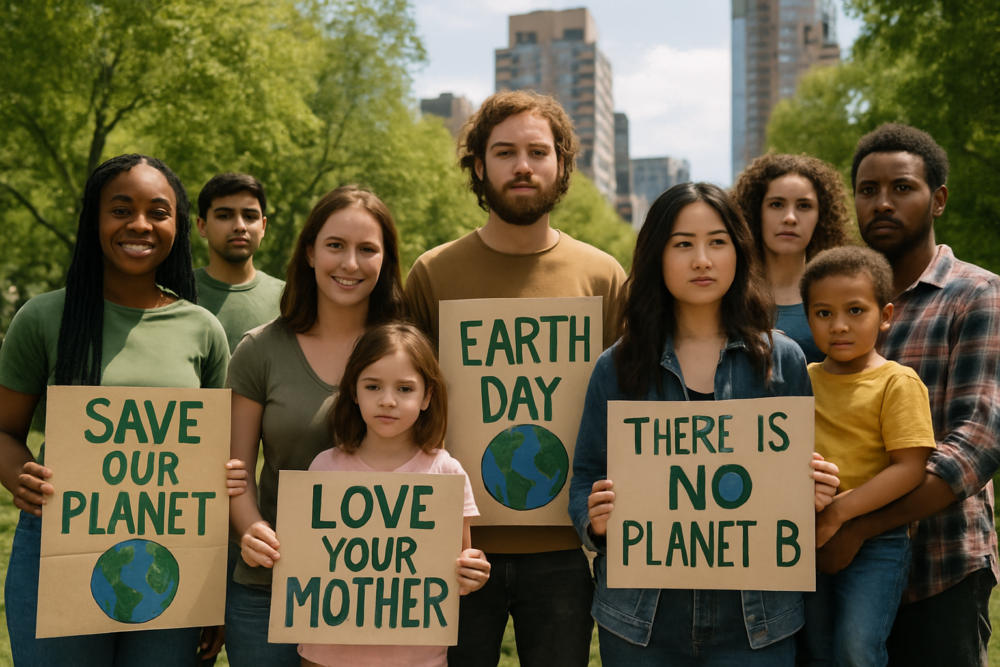
Earth Day 2025: Political Division Shapes Environmental Priorities and Policy
The 55th anniversary of Earth Day in 2025 arrives at a time of immense political polarization and heightened debate over the future of U.S. environmental policy. Once a bipartisan milestone, Earth Day now finds itself at the epicenter of ideological battles, with the meaning of environmental stewardship shifting according to party lines and media framing. This year’s Earth Day is not just a celebration, but also a mirror reflecting the nation’s deepening divisions on how to address the climate crisis, environmental justice, and the legacy of landmark environmental laws. Major policy rollbacks and the closing of environmental justice offices have raised alarms among advocates, while some argue that such moves are necessary for economic revival and energy independence. Meanwhile, millions of Americans—especially younger generations—increasingly report feelings of ‘eco guilt’ amid the nation’s struggle to find common ground on climate action.
“Earth Day should unite us, not divide us,” said longtime advocate Denis Hayes, who spearheaded the first national Earth Day event in 1970. “But today’s political climate makes environmental progress an uphill battle.”
Amid this climate of uncertainty, Earth Day continues to serve as a touchstone for progress and reflection—even as its focus is altered by current political realities. For many, the day is marked less by optimism and more by concern: Will hard-won environmental protections endure, or will they be swept away in the name of short-term gains?
Regulatory Rollbacks and Polarization: Earth Day’s Evolving Policy Landscape
Earth Day has historically been a rallying point for collective action, inspiring bipartisan support for landmark environmental legislation such as the Clean Air Act and the Endangered Species Act. Today, however, the nation faces a cascade of policy reversals, with the Trump administration moving to roll back or revisit more than 31 environmental regulations, including key greenhouse gas protections that have long formed the backbone of America’s climate response. On March 12, 2025, EPA Administrator Lee Zeldin (Republican) announced plans to close the agency’s environmental justice offices and reconsider the 2009 Endangerment Finding, which declared that greenhouse gases pose a threat to public health. These changes were justified as necessary for ‘powering the great American comeback,’ with the administration emphasizing taxpayer savings and energy independence.
Yet for critics and environmental advocates, these moves represent a profound step backwards: the EPA has announced it will dismiss or reassign over 450 staff members, disproportionately affecting those focused on environmental justice initiatives. Environmental groups have vowed to mount legal challenges against plans to eliminate all energy regulations by 2026 and expedite fossil fuel projects with minimal oversight.
“Rolling back crucial protections undermines decades of progress, especially for communities already overburdened by pollution,” commented Earthjustice attorney Marissa Fong. “We’re prepared to fight in court for the health and future of our children.”
This regulatory reversal has extended beyond domestic borders as well. On January 20, 2025, President Donald Trump (Republican) signed Executive Order 14162, formalizing the U.S. withdrawal from the Paris Agreement and other key international climate commitments. This move, celebrated by some as a restoration of national sovereignty, has dismayed advocates who fear that it signals a retreat from global climate leadership just as the world faces unprecedented heatwaves and extreme weather.
At the state level, battles continue to play out over local authority to enforce ambitious standards: the United States Supreme Court is now considering whether to revive a legal challenge to California’s strict vehicle emissions and electric vehicle mandates, potentially shaping the future of state-led climate action. In progressive cities like Portland, concerns remain over meeting emissions reduction targets, with calls for sustained ecological action beyond symbolic annual events.
Media Narratives, Eco Guilt, and the Enduring Impact of Earth Day
Earth Day’s role in shaping American consciousness is undeniable, but the narratives surrounding it have grown increasingly polarized. Progressive and mainstream outlets, such as PBS, often give voice to environmental justice advocates and highlight the urgent need for climate action—sometimes at the expense of dissenting perspectives. This has led to concerns about the balance of public discourse, with critics alleging that media coverage does not always challenge prevailing assumptions or include robust debate around policy solutions.
For younger generations, the messaging has been both empowering and anxiety-inducing. Millennials and Gen Z are significantly more likely than previous generations to experience ‘eco guilt’—a sense of responsibility or failure to live up to environmental ideals—stemming from increased exposure to climate change information and activism. This phenomenon has deep social roots, reflecting both the legacy of Earth Day and the pressures of a world where climate threats are ever-present.
“I grew up learning about recycling and climate change from an early age,” says college student Tiana Martinez. “I want to make a difference, but sometimes it feels overwhelming to know how much needs to change.”
Despite these anxieties, collective action remains a core theme. Environmental justice—addressing the disproportionate impact of pollution and climate change on marginalized communities—has moved to the forefront of the conversation. Yet, recent administrative actions threaten to curtail this focus: with the EPA’s environmental justice offices closing, there are renewed concerns about the federal government’s commitment to tackling systemic inequities. According to a recent analysis, Earth Day 2025 stands as both a celebration and a reckoning—one that underscores the need for inclusive solutions and a recommitment to progress.
Looking back, Earth Day’s legacy can be traced to grassroots efforts like those sparked by pollution in Camas, Washington, where Denis Hayes (who would go on to become a leader in solar power and energy policy) and others were inspired by local environmental harms to advocate for national action. Today’s political divisions may challenge the movement’s unity, but they also highlight the enduring influence of civic engagement and the importance of every contribution, no matter how small. Earth Day continues to remind us that while progress may be uneven, it is always possible—through persistence, innovation, and a renewed focus on justice for all.