

Obama Cautions Against Erosion of Democracy Amid Trump-Era Political Trends
Former President Barack Obama’s recent remarks in Hartford, Connecticut, have ignited a renewed conversation about the state of American democracy amid ongoing political turbulence and heightened concerns about rising autocratic tendencies. Speaking at a high-profile dialogue with historian Heather Cox Richardson, Obama did not mince words in warning that the United States is “dangerously close” to normalizing autocratic behavior. The event, hosted by the Hartford Foundation for Public Giving and The Connecticut Forum, drew a large audience, signaling just how resonant these anxieties have become.
Obama’s apprehension is rooted in troubling parallels he sees between recent U.S. political trends and those of autocratic regimes, such as Hungary under Viktor Orbán. “It is consistent with Hungary under Orbán,” Obama stated, referencing a nation where elections are technically held, but democratic norms have been steadily undermined. By invoking Hungary, he underscored the insidious ways in which illiberalism can take root—even under the veneer of democratic process.
“There also have to be people in government in both parties who say, ‘No, you can’t do that.’” – Barack Obama
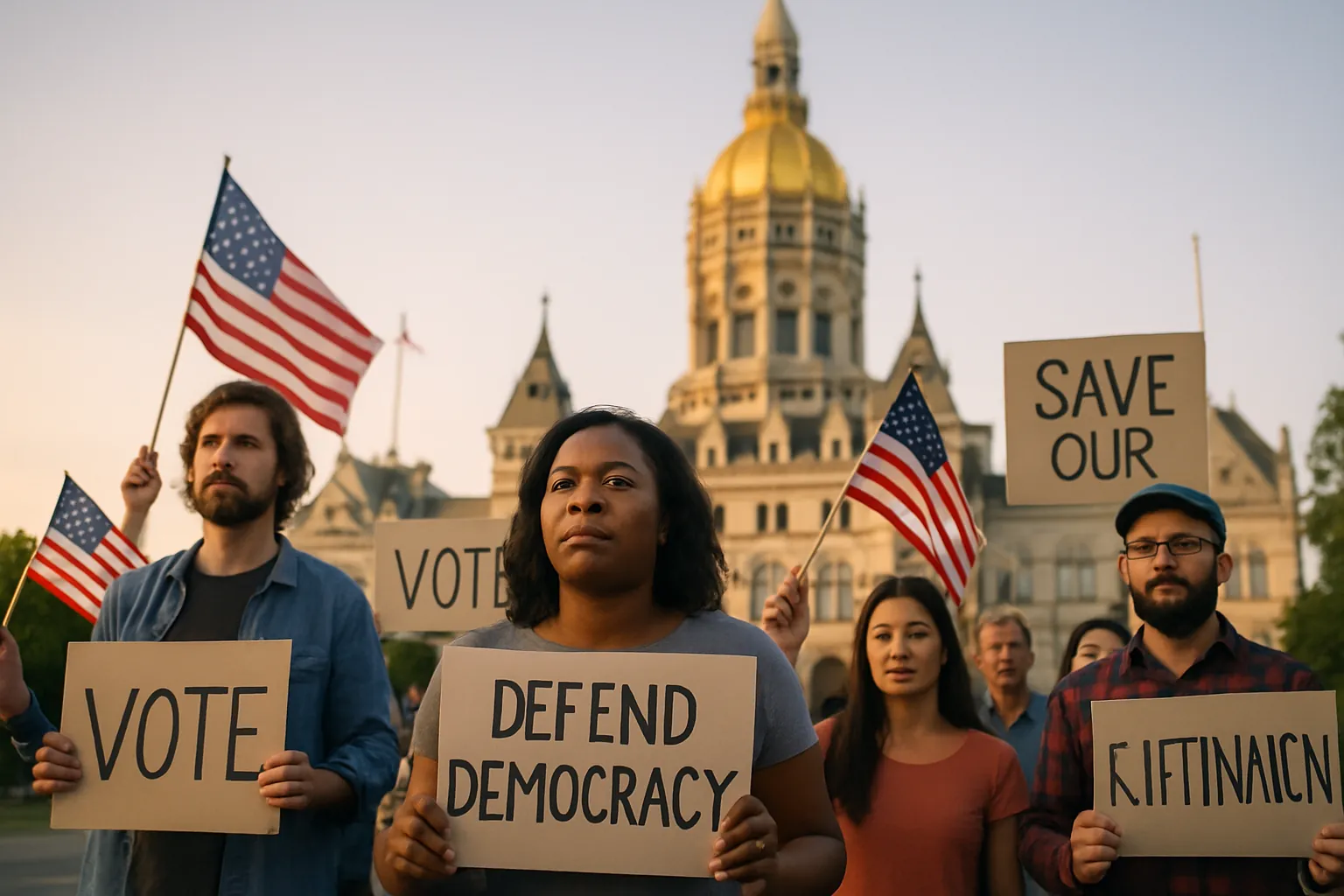
The former president also explicitly criticized the Republican Party for promoting false narratives around the 2020 presidential election and undermining the credibility of democratic institutions. These actions, says Obama, chip away at the foundations of liberal democracy. At the same time, he called for a robust response from both civil society and elected officials across the political spectrum, expressing appreciation for the nationwide “No Kings” demonstrations and other acts of civic resistance. His encouragement to young people—to stay hopeful and impatient for justice—served as a reminder that, even under threat, democracy is not a passive inheritance but an active project.
Notably, ticket prices for the event ranged from $90 to $645, reflecting both the high public demand for such conversations and the urgency felt among many about the nation’s political direction. Obama’s warnings arrive amid widespread protests and demonstrations, as Americans grapple with a sense of uncertainty about the country’s democratic trajectory.
Comparisons to Global Trends and the Imperative to Defend Democratic Norms
Obama’s Hartford address fits within a broader pattern of his post-presidential advocacy for the defense of democratic institutions and norms. He has repeatedly drawn lessons from other countries’ flirtations with autocracy, pointing to the dangers of complacency in the face of creeping authoritarianism. His invocation of Hungary under Viktor Orbán is particularly significant: despite outward signs of electoral democracy, Orbán’s government has systematically curtailed independent media, reshaped the judiciary, and consolidated power in ways that have eroded meaningful democratic opposition.
This is not the first time Obama has raised alarm bells about democratic backsliding. Back in 2017, he told an audience in Chicago that Americans must be vigilant, citing Nazi Germany as an example of how quickly a democracy can unravel if not actively protected (The Times of Israel). In the years since, he has only sharpened his warnings. During his 2018 address honoring Nelson Mandela, Obama condemned the rise of “strongman politics” globally and argued that leaders who undermine democratic rules and institutions pose a direct threat to freedom (CNN).
“History shows that the erosion of democratic norms often begins not with a single dramatic event, but with the slow normalization of previously unthinkable acts.”
During the Hartford event, Obama also pointedly highlighted the responsibility of key government institutions—such as the bureaucracy and judiciary—to uphold the Constitution and act in accordance with their oaths. A failure to do so, he warned, paves the way for gradual but serious erosion of America’s liberal democratic fabric. His critique did not spare the wealthy donor class, including affluent Democrats, whom he chastised for failing to make the kinds of sacrifices necessary to safeguard progress, recalling that even during his presidency, it was possible to be progressive without real cost.
These assessments come as the Republican Party continues to be roiled by internal divisions and persistent falsehoods regarding the 2020 election outcome. Obama’s insistence that both parties must have leaders willing to draw clear lines—publicly and consistently—reflects a belief that bipartisanship, when rooted in shared democratic values, remains one of the best bulwarks against autocracy.
Historical and Institutional Context: Safeguarding Democracy in a Polarized Era
The backdrop to Obama’s warning is a fraught period in American political history, defined by polarization, misinformation, and challenges to foundational norms. Yet, the conversation about the health of U.S. democracy did not begin with the Trump administration. Debates over the resilience of democratic institutions stretch back decades, though they have gained renewed urgency amid recent developments.
A central concern is the proliferation of movements and leaders who reject the spirit, if not the letter, of constitutional norms. The rapid spread of misinformation about the legitimacy of the 2020 election has put unprecedented stress on the electoral system and the faith Americans place in it. Obama’s perspective echoes his 2020 eulogy for Congressman John Lewis, where he warned that the Trump administration appeared willing to “tear our democracy down” simply to win (CNN).
Although the threat of autocracy is real and immediate, Obama’s remarks also emanated hope. He reminded attendees that the persistence of public protests, civic engagement, and the functioning of checks and balances—such as the ongoing judicial investigations and indictments—demonstrate that American institutions, while “creaky,” still possess strength (CNN). This cautious optimism is bolstered by the willingness of everyday citizens to speak out and demand accountability from those in power.
“The rule of law still exists, and our institutions—imperfect as they may be—can serve as the backbone of a renewed, more equitable democracy.”
Progressive solutions to preserve democracy focus on strengthening civic education, protecting voting rights, curbing misinformation, and fostering greater inclusion in the political process. Obama’s call to action resonates: a healthy democracy is not inevitable but depends on the vigilance and engagement of all its citizens—regardless of party affiliation. By encouraging both hope and impatience for justice, he signaled a belief in the transformative power of collective action. The current crossroads is daunting, but history offers many examples of communities pulling together to restore and renew the democratic experiment.