

Wave of Nationwide Protests Challenges Trump Administration’s Authoritarian Policies
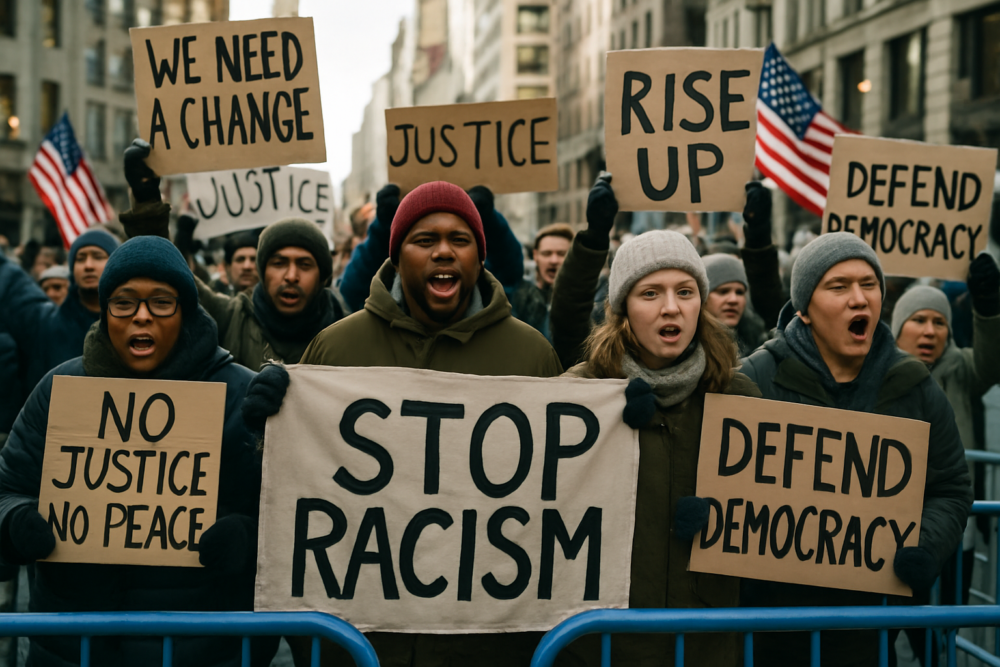
In a sweeping demonstration of civic engagement, tens of thousands across the United States took to the streets on April 19, 2025, voicing resistance to what many see as unprecedented threats to democracy, civil liberties, and social progress under the Trump administration. The protests were timed to coincide with the 250th anniversary of the start of the Revolutionary War, drawing a powerful parallel between the nation’s founding and its ongoing struggles for justice and equity. Events unfolded in iconic cities—New York, Washington, San Francisco—and in smaller communities alike, while Americans abroad, such as in Dublin, Ireland, joined in solidarity.
The coordinated action, spearheaded by the 50501 Movement and a network of allied grassroots organizations, delivered a resounding call for the protection of democratic institutions and inclusive policies. In cities like Denver, Portland, and Anchorage, demonstrators rallied against everything from mass deportations to the downsizing of federal agencies, from attacks on transgender rights to interference in academic freedom. Signs reflected the breadth of concern: “Science makes America Great,” “Fund Biology, Not Bigotry,” and “No More Deportations.”
On April 19, 2025, protests took place in cities nationwide, coinciding with the 250th anniversary of the Revolutionary War’s beginning, underscoring the historical resonance of the current moment (AP News). The 50501 Movement itself took its name from the date of its founding—February 5—marking a decentralized effort to defend democracy as movement leaders saw intensified federal overreach (Axios).
Protesters expressed alarm at the government’s rapid expansion of deportation policies, the firing of over 200,000 federal workers, and the chilling effect on science and higher education. Community events ranged from marches and teach-ins to food drives and nature cleanups, reflecting the hope that activism can also strengthen community resilience.
“We’re honoring the legacy of democracy by standing up now, just as our predecessors did 250 years ago,” said one organizer in Washington, D.C. “This is about protecting our neighbors and our values.”
Main Narrative: Democracy, Immigration, and Policy Backlash Ignite Unified Response
Public outrage was fueled by high-profile actions that many view as emblematic of authoritarian governance. Policies cited by demonstrators included the ongoing use of the Alien Enemies Act, expanded Immigration and Customs Enforcement (ICE) raids, and public threats to academic autonomy. Protesters in Boston linked their activism with historic civil rights milestones, retracing the steps of the 1965 Freedom Rally led by Martin Luther King Jr. and voicing concern over threats to diversity, equity, and inclusion initiatives in higher education (Axios).
Over 400 events were organized on April 19, 2025, by the 50501 Movement, featuring rallies and community service projects in a testament to the movement’s decentralized strength (Axios). National attention focused on the Trump administration’s threats to freeze $2.2 billion in federal grants and $60 million in contracts to Harvard University unless it submitted to a White House-approved audit; many critics described such moves as attacks on academic freedom and diversity of thought.
Crowds across the country condemned sweeping crackdowns by ICE, especially the recent arrest of Milwaukee Judge Hannah Dugan on charges of aiding someone to evade immigration authorities, which activists decried as another escalation in the federal government’s punitive approach (AP News). Rallies blended protest with constructive action: food drives offsetting the impact of social program cuts, and community cleanups underscored environmental priorities. In Spokane, demonstrators carried banners supporting scientific research and public health, directly challenging deep federal cuts to science and medicine.
“If the government won’t fund science, communities will,” proclaimed a sign at the March for Science in Spokane. Participants stressed that defending facts and evidence is essential, not optional, in America’s future.
Amidst the energy, many reflected on the sobering layoffs at the American Federation of Government Employees, one of the largest federal worker unions that has long criticized President Donald Trump (Republican). The union announced that more than half of its staff would be let go, mirroring the shrinking size and influence of the federal government itself (AP News). This moment crystallized the stakes for public sector workers and those who rely on robust government services.
Protesters and speakers voiced the urgent need for collective action, emphasizing voting and direct civic engagement as vital tools for defending democracy.
Contextual Background: Historical Parallels, Erosion of Norms, and the Stakes for American Democracy
The surge of protest in 2025 did not arise in isolation; it reflects years of mounting tension over the trajectory of American governance, civil rights, and public accountability. The selection of April 19—marking the shots fired at Lexington and Concord that launched the American Revolution—anchored the movement in a powerful tradition of public resistance to overreach and injustice. Activists and historians alike drew parallels between the anti-colonial struggle and today’s battles over voting rights, academic freedom, immigration, and the integrity of governmental institutions.
Protesters repeatedly cited erosion of legal protections, such as due process for migrants and rights for transgender Americans, as evidence of democratic backsliding (AP News). The administration’s willingness to downsize government agencies, restrict funding to universities advancing climate and diversity initiatives, and fire large swathes of federal workers has, according to critics, destabilized both the social safety net and the scientific community (Reuters).
The current wave of activism also builds on a legacy of peaceful protest as a catalyst for change—from the civil rights movement and antiwar demonstrations to LGBTQ+ and environmental advocacy of recent decades.
As one marcher in Boston declared, “Our country has never been perfect, but we have always moved forward when ordinary people stood up for what’s right.”
The retracing of the 1965 Freedom Rally highlighted both the victories won and the unfinished business of addressing systemic inequities, a point echoed by those concerned about the rollback of diversity and inclusion programs in education and government.
International solidarity added a global dimension to the movement, as Americans abroad joined in protest and allies voiced concern for the future of U.S. democracy.The opposition’s emphasis on voting—the very foundation of civic power—underscored a central theme: every act of resistance, from the ballot box to the food bank, makes a difference in shaping a more just society.
The scale and diversity of the April 19 demonstrations offered a testament to the persistent strength of American civil society. While partisan divides remain sharp and the path forward is fraught with challenges, the protests illuminated the enduring conviction that collective action, informed dissent, and solidarity can turn the tide. In the words of one organizer, “This is only the beginning.”