

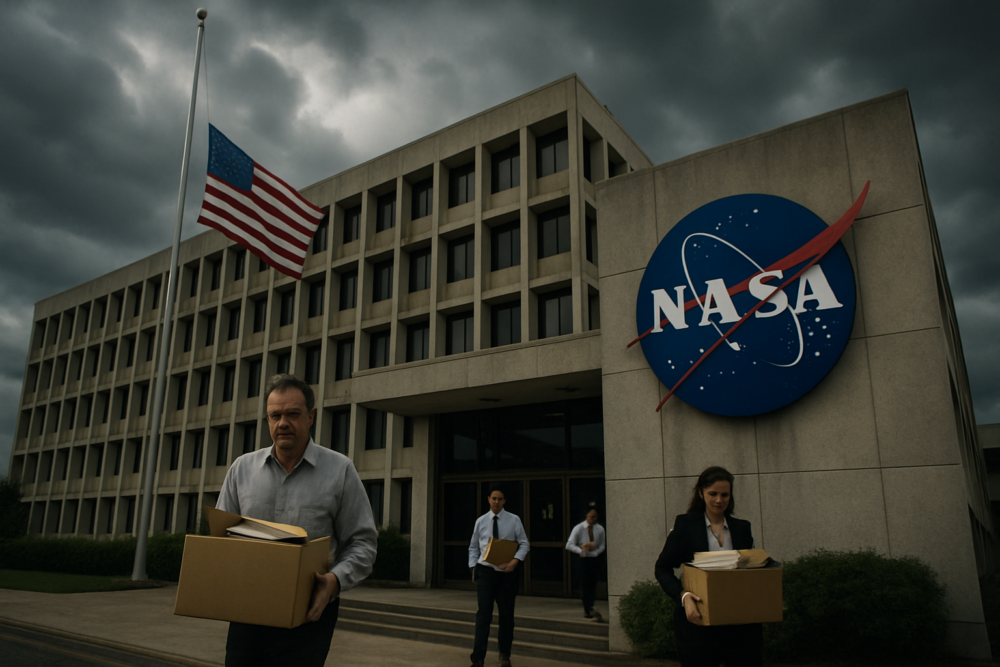
Budget Cuts and the Future of NASA: A Tense Moment for Space Policy
The future of American space exploration hangs in the balance amid proposed sweeping NASA budget cuts, a topic dominating recent long-tail keywords like “NASA budget reduction impact” and “science funding cuts 2025”. Elon Musk, SpaceX founder and vocal advocate for robust space investment, has sounded the alarm about the potential loss of momentum and innovation at NASA if the Office of Management and Budget’s (OMB) proposal is enacted. According to recent reports, the OMB has floated an overall 20% reduction in funding for the agency—with science missions set to endure a staggering 50% cut. This news has rippled through scientific and progressive communities, which have long seen steady science investment as a public good, vital for equity, inspiration, and American leadership on the global stage.
Amid this fiscal uncertainty, President Trump (Republican) has nominated billionaire Jared Isaacman to head NASA. Isaacman, already a prominent figure in private space ventures, faces a Senate confirmation process marked both by enthusiasm for space ambition and skepticism over corporate influence. The stakes are high: NASA’s capacity to continue flagship scientific projects, like exoplanet exploration or Earth monitoring, could be fundamentally altered if the proposed cuts proceed unchecked and if policy leans away from science toward purely human spaceflight.
“If we kneecap basic science and technology investments today, we risk falling behind—not just in space, but in education, climate research, and the innovation economy that impacts every community,” said a Democratic member of the Senate Appropriations Committee.
Progressive lawmakers and advocates warn that the loss of science investment undercuts not only STEM education pathways but also the broader public interest, especially for underrepresented groups who benefit from NASA’s educational outreach and diversity initiatives. Yet, optimism endures that collective advocacy—of citizens, scientists, and lawmakers alike—can help reverse or mitigate the most severe aspects of these cuts before they become law.
Senate Hearings Highlight Tensions Over Leadership, Independence, and Science Mission
The Senate confirmation hearings for Isaacman were anything but routine, reflecting anxiety over the intersection of public policy and private influence in charting America’s space future. A central focus of the questioning concerned Isaacman’s relationship with Elon Musk, given SpaceX’s pivotal role in NASA contracts. Senators probed whether Musk’s vocal opposition to the budget cuts might translate into outsized leverage behind the scenes. According to testimony, Isaacman insisted his interactions had been solely with the President and OMB officials, not Musk, and that he could act independently of private interests.
The hearings also spotlighted deep bipartisan support for ambitious space goals—even as methods and priorities diverged sharply. Isaacman echoed the administration’s vision: “First, American astronauts will lead the way in the ultimate ‘high ground’ of space,” with simultaneous missions to the Moon and Mars as part of NASA’s portfolio. This approach, while bold, raised practical concerns about whether human spaceflight will come at the expense of NASA’s longstanding scientific missions—including research on climate change and planetary science that directly impact life on Earth.
“It is not enough to plant just the American flag on the lunar surface,” one senator asserted. “We must also invest in the telescopes and satellites that give us knowledge, security, and tools for a better world.”
Isaacman attempted to strike a reassuring note, expressing his intent to preserve key science projects. Notably, he argued for a private mission to refurbish the iconic Hubble Space Telescope—a proposal previously declined by NASA leadership amid safety reservations. Although this solution may not satisfy every concern, it signals openness to public-private collaboration, a dynamic that has sometimes led to both innovation and equity gaps in the past. The path forward hinges on robust oversight, transparency, and ensuring that science missions do not become an afterthought to high-profile crewed flights.
The hearings offered a glimpse of how the next NASA Administrator could navigate these choppy waters—balancing the administration’s priorities, public interest science, and a rapidly evolving commercial sector. The challenge remains: Will Isaacman be able to sustain NASA’s dual goals of exploration and discovery under the financial constraints that may soon be imposed?
Historical Lessons and Policy Implications: NASA’s Mission in a Global Era
To understand the current crossroads, one must look to historical precedents and the evolving dynamics of global space competition. Since its founding, NASA has balanced the “right stuff” of crewed exploration with the steady, less glamorous work of scientific discovery. Periods of budgetary constraint have often resulted in difficult trade-offs—the post-Apollo era, for instance, saw major science missions delayed or canceled as priorities shifted. Today’s proposed reductions echo those past moments, but with the added pressure of a new space race: China’s well-funded lunar ambitions have motivated U.S. policymakers to reassert leadership, yet meaningful leadership depends on more than flags and footprints.
Isaacman’s confirmation testimony touched directly on this point, alluding to the challenge of keeping pace with China’s lunar program—which is aiming for a human landing by 2030. He promised senators: “We will step onto the Moon again, before China.” Yet, sustaining such a commitment against a backdrop of deep budget cuts will require ingenuity, strong Congressional coalitions, and a recommitment to NASA’s broad mandate—including climate, education, and basic science. According to international reporting, Isaacman aims to ensure the United States retains a clear lead, but the world is watching how inclusively and equitably the next phase of space exploration unfolds.
“Leadership in space is not just about reaching further; it’s about empowering more people to participate in the benefits of discovery and innovation,” said a leading NASA scientist, reflecting on the agency’s role in driving opportunity across society.
There are signs of hope that public advocacy, coalition-building, and a reassertion of public values can help buffer the most severe impacts of short-term cuts. Progressive policymakers have pledged to challenge proposals that would undermine NASA’s science mission, while grassroots groups mobilize to highlight the societal dividends of robust space investment—from STEM pipelines to environmental monitoring. The coming months will test whether America prioritizes not just space “dominance,” but also the shared progress that comes from investing in knowledge, public good, and innovation that benefits all.