

Analyzing Megyn Kelly’s Shift on Trump: Media Dynamics and Policy Debate
The evolution of Megyn Kelly’s relationship with Donald Trump is more than a simple tale of reconciliation; it provides a telling case study in how media figures, political leaders, and policy debates intersect. The keywords “Megyn Kelly Trump feud reconciliation,” “media trust,” and “policy shifts” resonate throughout this narrative, given Kelly’s high-profile journey from direct confrontation to open support for Trump. Her transformation—culminating in a composed, candid appearance on The Stephen A. Smith Show—has drawn both intrigue and skepticism, especially among those who value consistency and accountability from public personalities.
The original 2015 conflict between Kelly and Trump, ignited by her pointed questioning about derogatory remarks he made toward women, set a new precedent for heated public exchanges between the press and politicians in the digital era. The feud escalated with Trump’s repeated, personal jabs, with Kelly recently recalling he was “staying on me like a dog with a bone” for nine months. She described this period as highly unpleasant but emphasized her ultimate ability to move beyond personal grievances for professional reasons.
Public reconciliation was first glimpsed at the Turning Point Action Conference in July 2023. Kelly declared their disputes “under the bridge” after a private meeting, describing Trump as “magnanimous.” According to reporting, she said,
“There’s just something about him, it’s like an aura that sort of takes over the room.”
(source). This marked a substantial tonal shift after years in which Kelly herself warned of the dangers Trump’s hostility toward journalists posed for media legitimacy.
Her recent rationale, citing Trump’s policies on border security and opposition to so-called “woke” agendas in education, indicates the complex interplay between personal experience, political calculation, and the broader ideological climate of contemporary American media. These developments beg the question: should credibility rest on steadfast opposition or a willingness to reassess as circumstances evolve?
The Main Narrative: Policy Positions, Public Challenges, and Changing Allegiances
In her dialogue with Stephen A. Smith, Megyn Kelly outlined her gradual journey from Trump critic to supporter, underscoring that the process was neither hasty nor emotionally driven. This transition is particularly relevant in an era marked by sharp political divides, disinformation, and questions about the role of media in shaping, or simply reflecting, public opinion. Kelly explained that her embrace of Trump stemmed not from forgetfulness of past grievances but from a growing appreciation for his governing style and specific policy stances—especially on immigration, education policy, and attacks on Diversity, Equity, and Inclusion initiatives.
During her appearance, Smith pressed her on what truly motivated her “dramatic shift” and whether she could convincingly explain her current political identity and beliefs—a challenge for any media figure straddling public and personal loyalties.
Kelly’s explanation revealed important insights about the current political media ecosystem, where professional necessity can sometimes override personal animus. She argued that Trump’s promises to “close the border,” fight “gender madness,” and remove DEI programs from education convinced her he was the stronger candidate compared to President Joe Biden (D). Yet, critics note that these positions are often couched in language that can marginalize vulnerable communities and dial back essential progress on equity and inclusion. Smith’s direct questioning cut to the heart of the credibility issue:
“What about you? What do you stand for and where do you stand on at this particular moment in time and why is that the case?”
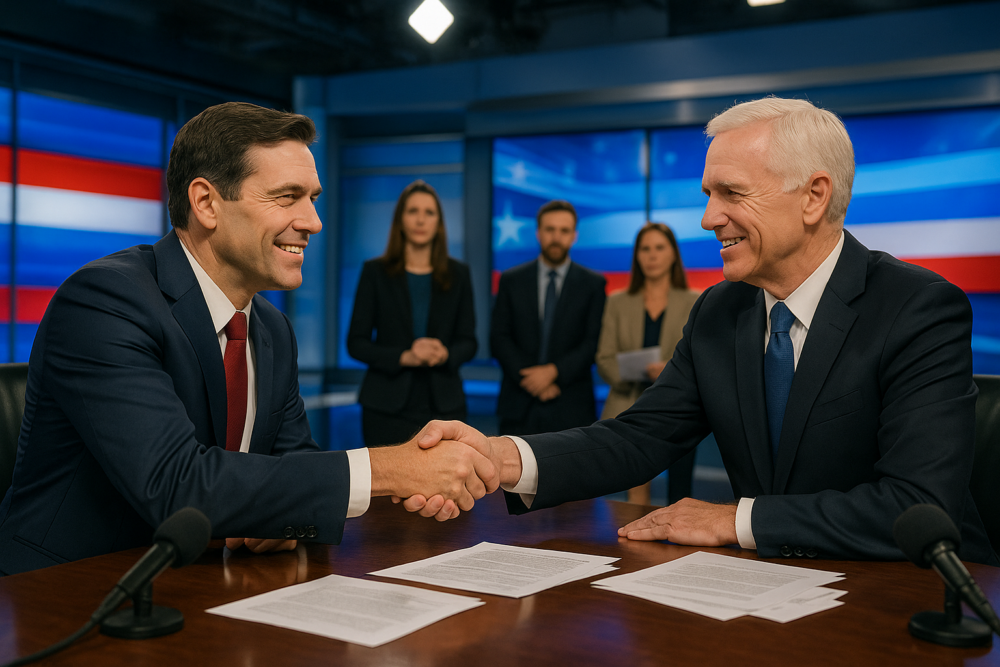
The reconciliation became even more visible in September 2023, when Kelly welcomed Trump for a surprisingly cordial interview on her SiriusXM program. Trump called her 2015 debate question “nasty,” yet Kelly replied, “That was a great question,” modeling a willingness to engage across personal history (interview coverage). Such exchanges highlight the complicated dance of respect, rivalry, and realpolitik that often underpins media-political relationships.
For those invested in progressive values, Kelly’s embrace of anti-DEI policies and critique of “woke” education agendas invite close scrutiny. These stances risk legitimizing efforts that erase hard-won advancements toward inclusion in education and diminish the voices of marginalized groups. However, the visible public dialogue and critique, like those offered by Smith and others, are essential in holding high-profile figures accountable and fostering a more transparent, equitable political conversation.
Historical Context and Broader Implications: Media Trust, Policy Backlash, and the Politics of Reconciliation
The Kelly-Trump saga is best understood within a broader historical and policy framework regarding media credibility, public trust, and the evolution of right-wing populism in the United States. In 2016, Kelly publicly warned that Trump’s attacks on the media marked a “dangerous phase,” raising alarms about the potential to delegitimize the press and undermine the watchdog role so vital to democracy (NPR interview). Her current stance, then, presents a striking turn and demonstrates the fluidity with which some media actors navigate shifting political tides.
This saga illuminates a pattern frequently observed in the American political-media landscape: personal grievances can be subordinated to broader political objectives, especially when ideological realignment offers strategic advantage or aligns with evolving public sentiment.
The push for anti-DEI policies and critiques of “gender madness” must be viewed in light of nationwide legislative efforts to curtail diversity and LGBTQ+ rights. These efforts often provoke backlash from civil rights groups, educators, and progressive lawmakers, who argue that dismantling DEI initiatives risks rolling back decades of work to foster equity in education and the workplace. The public normalization of these positions through influential media figures like Kelly has wide-reaching impact, as it can lend legitimacy to exclusionary rhetoric.
At the same time, the reconciliation between Kelly and Trump may signal the potential for dialogue and negotiation, even across deep divisions.
By engaging openly about past disputes and present disagreements, both figures contribute—however imperfectly—to a culture in which adversaries can find common ground or at least clarify their principles in public view.
While these reconciliations may not always foster policies that advance progress and equity, they do model the possibility of moving past entrenched animosities—a prerequisite for broader social problem-solving.
For those advocating progressive change, the episode is a reminder of the importance of sustained, collective engagement. Every contribution, from public critique to grassroots activism, shapes the trajectory of national debates on policy, media, and justice. The challenge remains to hold leaders and influencers accountable while striving for a society rooted in fairness, truth, and inclusive progress.