

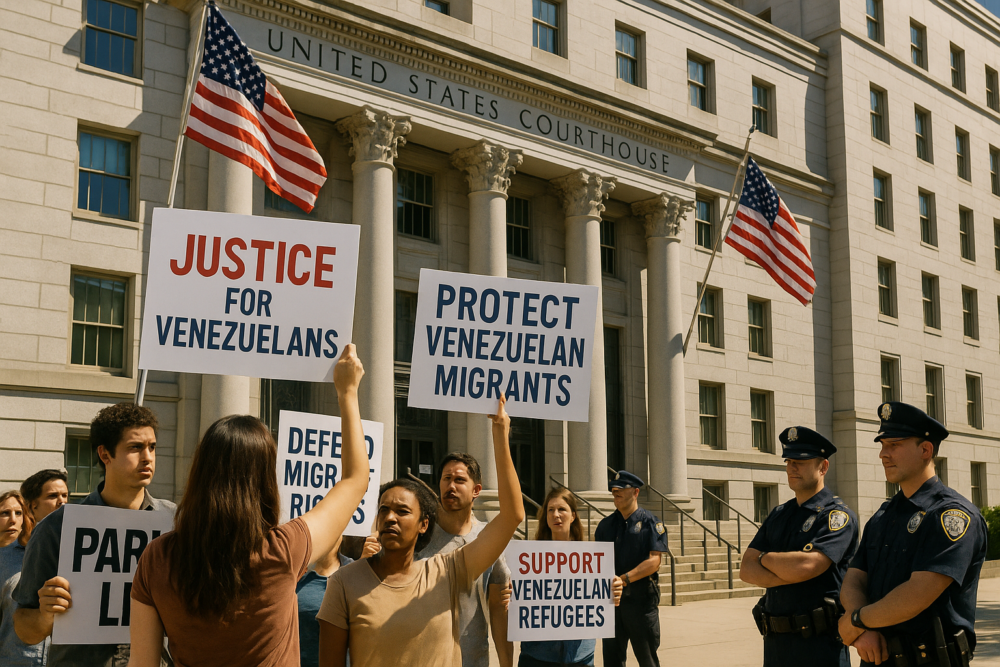
Overview: Federal Judges Halt Trump’s Emergency Deportation Orders for Venezuelans
In an intensifying struggle over immigration and civil liberties, federal judges have issued critical rulings to halt the Trump administration’s attempt to deport Venezuelan migrants under the Alien Enemies Act without adhering to due process. This legal standoff, focused in the Southern District of New York and the Southern District of Texas, aims to ensure migrant rights are respected even amidst heated political debate over national security and immigration policy. At the heart of the controversy is the administration’s reliance on laws dating back to 1798 and its recent deportations of migrants to the CECOT prison in El Salvador, notorious for its harsh conditions and well-documented human rights abuses. These events highlight the enduring tension between executive power in times of perceived national crisis and the constitutional guarantees of due process that form the bedrock of the American legal system.
Late last week, Judge Alvin Hellerstein in New York responded to an emergency request from advocates and issued a restraining order, explicitly requiring notice and a hearing before any further removals in the region. Meanwhile, Judge Fernando Rodriguez Jr. echoed this precaution in Texas, underscoring the necessity of protecting vulnerable migrants from immediate and irreversible harm.
These developments unfold as the Supreme Court reviews the dramatic case of Kilmar Abrego Garcia, a Maryland man mistakenly deported to El Salvador. With Chief Justice John Roberts (Republican) temporarily pausing Garcia’s return, the high court’s decision could set a precedent for how due process is handled in future deportation cases. Immigrant rights groups, legal scholars, and community organizations have welcomed these judicial interventions, seeing them as vital safeguards for fundamental rights.
“The court was correct to block any more removals to a notorious foreign prison without due process,” Judge Alvin Hellerstein stated in his Southern District ruling.
The legal momentum is a reminder that, though policy disputes may be fierce, the courts can serve as crucial arbiters to protect the rights of all people—no matter their nationality or political climate. As of April 24, federal judges had already blocked the administration from moving forward with deportations of Venezuelan immigrants without due process, reinforcing the judiciary’s central role in upholding constitutional norms.
Main Narrative: Judges Cite Human Rights Risks and Uphold Legal Protections
Judicial interventions have not only paused deportations but have also sparked a deeper national debate about the reach of executive power and the obligations to respect human dignity within the immigration system. The Trump administration’s rapid move to deport Venezuelan migrants, utilizing emergency powers in the Alien Enemies Act—an exceptionally rare and historically fraught legal tool—has alarmed advocates and legal experts alike. The administration’s decision to send deportees directly to CECOT, El Salvador’s notorious mega-prison, has drawn particularly intense scrutiny due to reports of systemic torture and denial of access to legal counsel or outside contact.
In the Southern District of New York, Judge Alvin Hellerstein underscored the imperative that every individual subject to removal must receive proper notice and a fair hearing—fundamental components of American jurisprudence. Judge Fernando Rodriguez Jr. in Texas made a parallel ruling, stating, “The Court finds that maintaining the status quo is required… to prevent the immediate and irreparable injury that may occur with the immediate removal of any Venezuelan.” Both decisions pointed to the existential risks migrants face if sent back without legal review, especially when the destination is an institution with a reputation for horrific abuse.
Recent reporting confirms that the Trump administration dispatched Venezuelans to CECOT without transparent legal procedures, exacerbating fears about the erosion of civil liberties and humanitarian protection. In this context, the case of Kilmar Abrego Garcia stands out. His mistaken deportation to El Salvador was halted in extraordinary fashion when Chief Justice John Roberts temporarily stayed his return pending Supreme Court review. This development has been described as a bellwether for how future challenges to expedited removal—and alleged government overreach—may be handled.
“Maintaining the status quo is required… to prevent the immediate and irreparable injury that may occur with the immediate removal of any Venezuelan,” Judge Fernando Rodriguez Jr. wrote in his Texas decision, reflecting a consensus emerging among lower courts.
Legal aid organizations and progressive lawmakers have celebrated these rulings as vital defenses against excessive executive authority. They argue the judiciary has correctly recognized the “real and present dangers” facing migrants and the indispensable need for fair, individualized hearings. The courts’ willingness to step in also reaffirms the American principle that no branch of government, not even in times of national stress, is immune from legal accountability—a message resonating beyond the immigrant community and into wider debates about civil rights and the rule of law.
Context and Broader Ramifications: Due Process in the Face of Executive Overreach
The recent judicial rulings echo long-standing legal doctrines and historical precedents regarding the limits of emergency executive powers, especially when immigration and national security concerns intersect. Efforts to invoke the Alien Enemies Act for mass deportations are rare and have traditionally been met with skepticism by the courts given the risk of sweeping civil rights violations. Echoes from darker chapters in history—such as the internment of Japanese Americans during World War II and more recent controversies surrounding family separation at the border—remind the public and policymakers of the need for vigilance.
Expert observers note that by pausing rapid deportations, the judiciary is engaging in a crucial constitutional function: ensuring that no individual is deprived of liberty without “notice and opportunity to be heard.” This core tenet has guided Supreme Court decisions for generations and undergirds international human rights conventions ratified by the United States. The ongoing case of Kilmar Abrego Garcia, as now before the Supreme Court, highlights just how precarious these rights can be when administrative mistakes or haste circumvent legal safeguards.
More broadly, these cases reveal mounting resistance among courts to the Trump administration’s restrictive immigration agenda, particularly when it conflicts with procedural due process. As one recent analysis put it, the judiciary has become the last line of defense for migrant rights against sweeping policies that risk undermining the rule of law. The effect is not merely symbolic; by enforcing judicial review, federal courts remind the executive branch and the public that American values are best served by transparency, accountability, and compassion.
“The broader context highlights challenges to the Trump administration’s immigration policies and the courts’ emphasis on upholding due process rights,” as recent commentary has noted, reinforcing the role of the judiciary.
Looking ahead, the legal battles underway will likely shape future interpretations of executive authority and immigration law. Community advocates, legal organizations, and individuals across the country are watching closely, determined to ensure that America remains a nation of laws as well as a land of welcome. Each temporary restraining order, injunction, and Supreme Court pause is more than a bureaucratic hurdle—it is a testament to the ongoing struggle to harmonize national security with justice, dignity, and the rule of law. The path forward is uncertain, but these court rulings offer hope that, through collective effort and vigilance, fundamental rights can prevail in the face of adversity.