

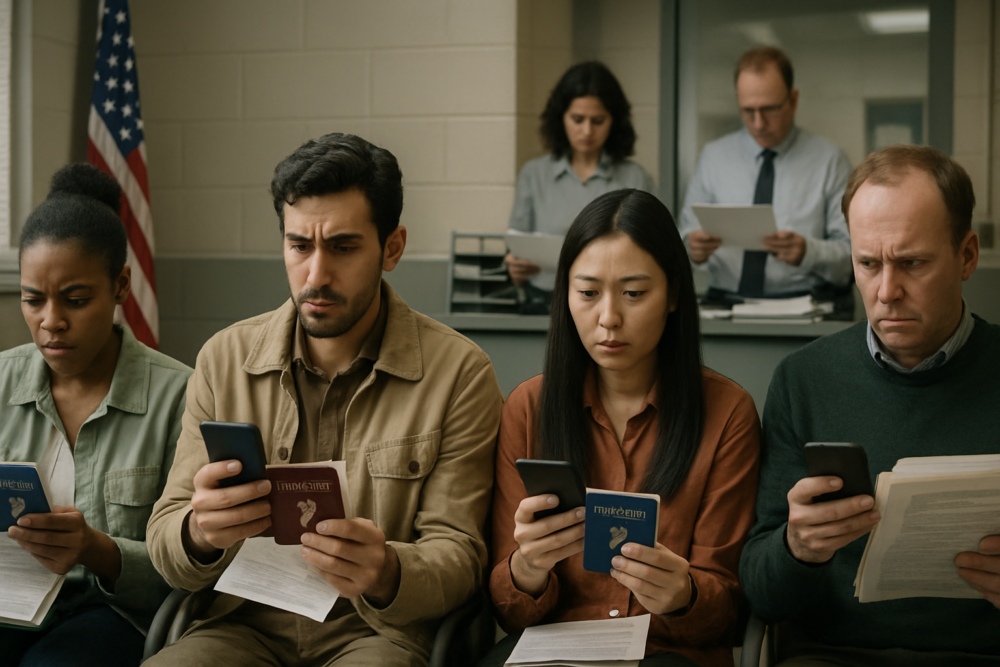
Homeland Security Social Media Policy Raises Speech Concerns for Immigration Applicants
The intersection of immigration, antisemitism, and free speech is again in the national spotlight, as the U.S. Department of Homeland Security (DHS) and Citizenship and Immigration Services (USCIS) move forward with a new policy screening immigrants’ social media for antisemitic content as part of the application process for green cards, student visas, and other benefits. The Biden administration says these changes are designed to address rising antisemitism nationwide, reflecting a zero-tolerance stance on hate-driven rhetoric and activities. Applicants found to have supported groups deemed terrorist organizations—such as Hamas or Hezbollah—or engaged in social media activity perceived as antisemitic, could be denied benefits or face deportation. This sweeping change impacts not only prospective immigrants but also current foreign students and visiting scholars, particularly in the aftermath of contentious protests on college campuses.
According to recent reporting, the DHS policy covers a broad spectrum of online behaviors, including both direct advocacy of violence and more ambiguous expressions that could be interpreted as antisemitic. Officials emphasize their intent to protect Jewish communities from hate; Assistant Secretary Tricia McLaughlin declared, “There is no room in the United States for the rest of the world’s terrorist sympathizers.” The policy also considers instances of physical harassment against Jewish individuals as grounds for denying immigration benefits, further expanding the criteria for exclusion.
At the same time, critics see this policy as overbroad, warning that classifying support for Palestinians or criticism of Israeli government actions as antisemitic risks suppressing legitimate dissent and academic inquiry.
As these new protocols take effect, a fundamental debate has emerged over where to draw the line between combating hate and stifling free expression. Many advocacy and civil rights groups worry that the DHS policy sets a precedent that could chill speech and discourage open debate, especially on sensitive geopolitical issues. The policy’s reliance on social media surveillance to adjudicate eligibility has brought renewed scrutiny to the ethics and efficacy of monitoring online activity for signs of hate or extremism.
Legal, Ethical, and Civil Rights Implications: Critics Sound the Alarm
A central concern is that the DHS’s broad definitions and monitoring may conflate criticism of Israeli policy or support for Palestinian rights with antisemitism, drawing condemnation from a spectrum of advocacy groups. Notably, Jewish organizations and the Foundation for Individual Rights and Expression (FIRE) have voiced opposition, characterizing the policy as an encroachment on free speech and academic freedom. The controversy is amplified given the context of campus activism: many universities have seen pro-Palestinian protests escalate, with some participants facing threats of deportation or removal from educational programs under the administration’s executive orders targeting foreign students allegedly linked to “hateful ideologies.”
Recounting recent developments,
civil liberties organizations warn that targeting immigrants or students for their online speech undermines both the First Amendment and America’s tradition of academic freedom.
Legal experts have also flagged potential constitutional issues, given that advocacy for Palestinian rights could be deemed antisemitic under the policy’s current implementation. Civil rights attorneys are preparing to challenge the measures in court, citing the risk of “chilling” legitimate political expression and the targeting of minority voices. These concerns resonate with longstanding debates over how the U.S. balances national security, minority safety, and constitutionally protected freedoms. The situation is particularly acute as dual pressures mount to combat actual hate crimes against Jewish communities while safeguarding civil liberties.
The American approach finds parallels abroad. In Taiwan, the government’s Mainland Affairs Council recently revoked the residency permit of a Chinese influencer after reviewing social media videos the council interpreted as advocating military action for unification with China. This move raised fears among lawmakers and free speech advocates—such as DPP Legislator Chuang Jui-hsiung—of a slippery slope where political speech is policed by immigration authorities without clearly defined legal limits. As Taiwan’s MAC claimed it had “no need for debate” over the influencer’s video evidence, critics demanded transparent and consistent standards to avoid chilling broader political discourse.
International and Historical Context: Precedents, Policy Definitions, and the Path Forward
These developments are part of a larger global trend: governments are increasingly using social media scrutiny in immigration decisions, often invoking the need to combat hate, radicalism, or foreign interference while facing accusations of censorship and overreach. The U.S. government’s approach draws in part on the International Holocaust Remembrance Alliance (IHRA) definition of antisemitism, which identifies a wide array of actions and statements as potentially antisemitic, including certain forms of criticism of Israel. While this definition is intended to help identify and prevent hate, its application in immigration and academic settings is controversial, particularly when it comes to distinguishing between antisemitism and political speech.
Many policy analysts and free speech advocates argue that governmental reliance on social media monitoring risks both overreach and misinterpretation, as online posts lack context and can be subject to varying interpretations by reviewers.
The Biden administration’s position is that enhanced vetting helps prevent extremist ideologies from gaining foothold in U.S. institutions, especially universities, where recent protests and campus tensions have prompted calls for stricter oversight. Plans by USCIS to collect applicants’ social media handles have been met with skepticism by privacy and immigration advocates alike. They warn that such monitoring, if not carefully circumscribed, could sweep up not only genuine threats but also dissenting voices, eroding the open dialogue central to democratic society.
Precedents for this style of policy are well-documented. The Trump administration previously signed executive orders directing the deportation of foreign students who participate in what authorities label as antisemitic or hateful protests, moves that brought swift pushback from civil rights groups concerned about free expression and due process. Internationally, Taiwan’s experience highlights the fragility of “acceptable speech” standards in times of heightened security concerns.
As governments grapple with the threat of hate-driven extremism, the progressive challenge is to support genuine safety and inclusion while upholding core values of open debate and dissent. Many observers believe that with broad stakeholder engagement—immigrants, universities, civil liberties organizations, and affected communities—there are solutions that avoid blanket censorship in favor of nuanced, transparent, and rights-respecting policy frameworks. Collective vigilance and democratic dialogue remain vital as America and the world navigate the delicate balance between security and freedom.