

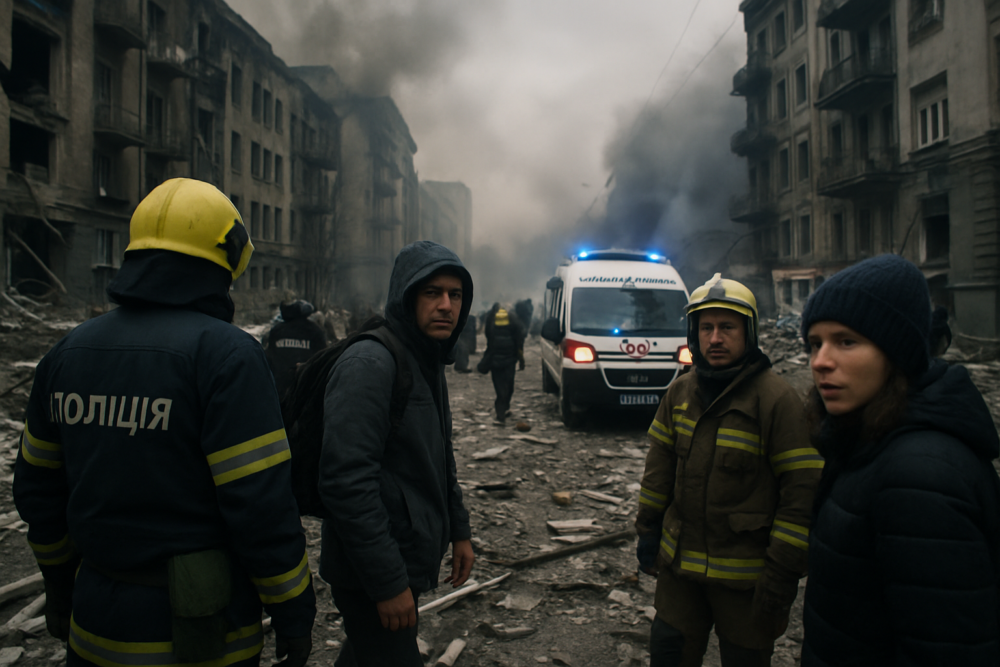
Kyiv Endures Deadliest Attack in a Year: Russian Strikes Escalate Amid Peace Talks
Early morning air raid sirens shattered any sense of security in Kyiv, as Russian missile and drone strikes unleashed devastation across the Ukrainian capital. At least 12 civilians were killed and over 90 wounded, marking the deadliest assault on Kyiv in nearly a year. The barrage, which also targeted Dnipropetrovsk Oblast and other regions, underscored the ongoing volatility of the conflict and heightened the urgency of peace efforts currently underway.
In a particularly harrowing development, the attack on Kyiv coincided with reports of renewed diplomatic talks between Russia and Ukraine, intensifying the stakes for all parties involved. Russia’s campaign extended far beyond Kyiv, with a large-scale drone assault striking Dnipropetrovsk Oblast. Fires ignited in several areas, including industrial facilities and a high-rise building in Pavlohrad, where a 76-year-old woman lost her life and eight others were injured—one critically. Even as Ukrainian air defenders destroyed 11 Russian UAVs during the attack, the sheer volume of assaults strained defense systems and left significant civilian infrastructure damaged in both urban and regional communities.
Outside Kyiv, Russian forces deployed FPV drones and Grad multiple-launch rocket systems to attack the Nikopol district. While an industrial facility was damaged, local authorities reported that, fortunately, there were no casualties in that particular strike.
“The capital has been hit in a way we haven’t seen in almost a year. It’s a tragedy for the families, and a tragic reminder that this war still threatens innocent lives every day,” said one Kyiv city council member. “We need real global support—diplomatically, militarily, and morally.”
The strikes came as much of the world’s attention was focused on the long-stalled peace process, which has recently shown rare signs of movement. Yet with each escalation, the pathway to a negotiated settlement becomes more emotionally fraught for Ukrainian citizens and their allies, even as leaders on both sides cite the high human cost as a motivation for urgent diplomacy.
Peace Negotiations Under Intense International Pressure: Trump Weighs In
The latest attacks thrust peace negotiations squarely into the global spotlight. In an unusual move, U.S. President Donald Trump (Republican) delivered direct condemnation of the Russian assault, calling the situation “untenable” and highlighting the urgency of finding a diplomatic resolution. Trump stated to reporters, “5000 soldiers a week are dying. Lets get the Peace Deal DONE!” and acknowledged that he has set his own deadline for reaching an agreement. His comments reflect both the desperation to halt the loss of life and the mounting international pressure for compromise.
Crucially, Trump emphasized that the United States is applying intense pressure on Moscow to reach a peace agreement, with both Russian and Ukrainian officials now acknowledging ongoing talks but remaining divided on key issues. The U.S. has also reportedly pressed Ukraine to consider realistic concessions, while Russia has signaled a willingness to negotiate but continues its military operations. This dual-track approach aims to create the conditions for a lasting ceasefire, even as violence on the ground persists.
NATO officials have stated that future steps in the process depend on Russia’s willingness to compromise, signaling that the alliance is closely monitoring Moscow’s actions before making further commitments. The volatility of the situation has left communities on edge, but leaders remain cautiously optimistic that a diplomatic breakthrough might finally be within reach.
“Diplomacy is always hard, but continuing the war is even harder for families who have lost so much,” said a senior U.S. State Department official. “We’re not just looking for a pause in fighting, but a real path forward to rebuild trust and a sustainable peace.”
The world is watching these negotiations intensely, as the outcome will affect not only those living in immediate conflict zones but also the stability of the broader region. Civil society organizations have urged the U.S. and European partners to center humanitarian needs and the long-term democratic aspirations of the Ukrainian people in any settlement.
Historical Context and Wider Implications: War, Policy, and the Long Road to Peace
The violence in Kyiv and beyond is a grim reminder of the pattern of escalation and stalemate that has defined the Russia-Ukraine conflict since 2014. While limited ceasefires and hesitant dialogue have occasionally slowed the violence, neither side has managed, until now, to come close to a comprehensive resolution. Each new round of attacks reinforces the devastating toll on Ukrainian infrastructure, economic stability, and human health, with ripple effects reaching far into Europe and the global order.
Historically, Ukraine’s resilience in the face of military aggression has inspired global solidarity, galvanizing cross-national efforts to provide humanitarian aid, strengthen sanctions against Russia, and support Ukraine’s defense and reconstruction. At the same time, policy debates have emerged in the United States and Europe over the proper balance between supporting Ukraine’s sovereignty and pressing for diplomatic compromise to end the conflict. Some analysts warn that imposing excessive pressure on Ukraine during peace talks could risk undermining core democratic values and embolden future acts of aggression, while others argue that swift diplomatic action is necessary to save lives and set the stage for eventual recovery.
Looking back, the pattern of war and negotiation is not unique to Ukraine. Prior global peace processes, from Northern Ireland to the Balkans, have demonstrated that inclusive dialogue, international backing, and strong civil society participation are key to achieving lasting settlements. The challenge in the current context is not only to stop the fighting, but to build a framework that addresses grievances, enables reconstruction, and prevents future cycles of violence.
“It’s not enough just to sign a deal. There needs to be accountability, justice, and a plan for the future,” observed a Ukrainian human rights advocate. “We hope the world remembers that peace is more than just the absence of bombs.”
As Ukraine stands at a crossroads, the courage and solidarity shown by its citizens—and by those in the global community who support them—offer hope that a genuinely just and equitable peace is possible. Every voice calling for dignity, safety, and democracy matters in this critical moment.