

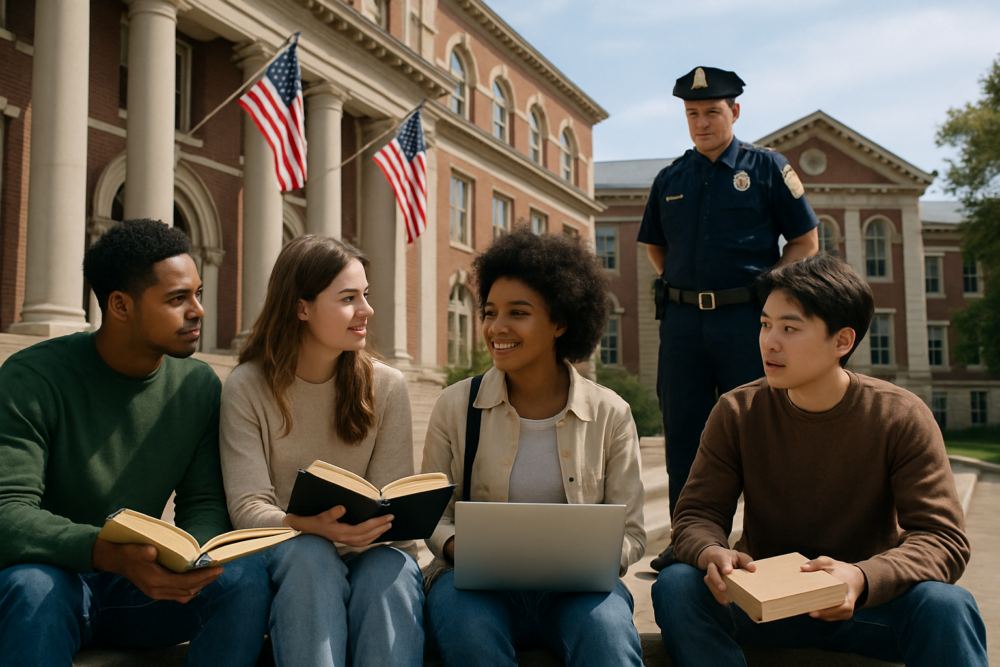
Heightened Immigration Enforcement Targets International Student Activists
In recent months, the Trump administration’s crackdown on international students and the intersection of immigration and protest rights on U.S. campuses has come under intense scrutiny. The aggressive revocation of student visas and subsequent detentions of activists at prestigious universities, including Harvard, Tufts, and Columbia, marks a pivotal moment for academic freedom and civil liberties. Amid escalating tensions in the Middle East and rising student activism—particularly around Israeli actions in Gaza—federal authorities have targeted students perceived as politically active or critical of U.S. foreign policy, often on dubious or minor legal grounds.
Notably, Tufts University Ph.D. candidate Rümeysa Öztürk was detained by Immigration and Customs Enforcement (ICE) on March 25, 2025, for alleged support of Hamas, according to federal officials. Yet no formal charges have been filed, sparking widespread criticism from lawmakers and civil rights organizations, who decry the administration’s apparent use of immigration law as a tool to suppress dissenting voices. This episode forms part of a broader pattern: the Trump administration has initiated a crackdown on international students involved in political activism, leading to detentions and potential deportations that reverberate well beyond individual cases.
Harvard researcher Kseniia Petrova encountered similar treatment when ICE detained her following a customs declaration error involving frog embryo samples. Her visa was revoked, and colleagues fear for her safety if deported to Russia because of her anti-war activism. The administration’s actions have drawn mounting concern from both the academic community and members of Congress, who warn that these moves threaten free speech, due process, and the openness of American higher education itself.
“Given her past involvement in protests against that country’s invasion of Ukraine, they fear she could be imprisoned for years,” said Leon Peshkin, Petrova’s mentor, about the potential consequences if she is sent back to Russia.
Columbia University has also found itself at the center of controversy after ICE detained student activist Mahmoud Khalil, a Palestinian-American, for his participation in campus protests. The American Civil Liberties Union sharply denounced the arrest, labeling it a violation of Khalil’s First Amendment rights. Meanwhile, other international students—such as Iranian doctoral student Alireza Doroudi—have faced similar threats, with detentions justified on national security grounds but lacking clear or compelling public evidence.
This targeting of international students sends a chilling message—one that many argue undermines the nation’s commitment to diversity, intellectual exchange, and democratic participation. For the students themselves, the consequences are severe: loss of legal status, risk of deportation, and the potential for harassment or persecution upon return to their home countries. These outcomes risk lasting harm not only to individuals but to the very fabric of American academia.
Inside the Wave of Visa Revocations and Detentions: Legal, Political, and Human Costs
The detentions of Öztürk, Petrova, Khalil, and others are not isolated events. The Trump administration has revoked the visas of more than 4,700 international students—often for minor or dismissed offenses—exposing a troubling pattern of punitive enforcement. Many students have suddenly found themselves undocumented, with limited recourse or support. This surge in enforcement has generated more than 100 lawsuits and emergency injunctions across 23 states, with judges frequently rebuking the administration for overreach and lack of due process, according to recent reporting by Time.
Current enforcement has not stopped at student protestors. In Alabama, doctoral student Alireza Doroudi was detained in April 2025, despite his lawyer’s assertion that he remained eligible to study so long as he fulfilled academic requirements. The Department of Homeland Security cited national security but failed to provide details, mirroring the lack of transparency in Öztürk’s case. The growing stack of such cases underscores the vague standards and opaque justifications often invoked to strip students of their legal protections.
“This is not about public safety; it’s about intimidating a generation of scholars,” said one immigration attorney representing several affected students. “The chilling effect is palpable in every classroom and lab.”
University leaders nationwide now face the challenge of supporting international students under threat. Many institutions are offering legal counsel, urging continued enrollment where possible, and launching appeals. The Presidents’ Alliance on Higher Education and Immigration has filed a lawsuit to challenge the blanket revocation of student status, seeking to restore stability and uphold the principles of academic freedom and due process. As reported by Reuters, universities are also advising students on navigating the legal minefield and resisting panic-driven choices that could jeopardize their futures.
Lawmakers have stepped in, too. Massachusetts Senators Ed Markey (Democratic) and Elizabeth Warren (Democratic), along with several colleagues, have demanded explanations for Öztürk’s arrest and called for her release, citing a lack of compelling evidence and warning about the broader consequences for international education and civil liberties. These interventions reflect a determination among progressive leaders to ensure accountability and due process even as federal agencies assert broad enforcement powers.
Detentions and removals linked to political activity not only disrupt individual lives, but also diminish the intellectual and cultural vibrancy that international scholars bring to U.S. campuses. In the meantime, international student journalists and editors face difficult ethical dilemmas, with a marked rise in requests to remove or anonymize published content for safety reasons—a phenomenon now reshaping newsroom standards across the country.
Constitutional Rights, Due Process, and the Fight for Inclusive Higher Education
The pace and scope of enforcement since January 2025 have dramatically shifted the landscape for international students in the United States. President Donald Trump’s early actions have included halting humanitarian programs, revoking work permits, and extending immigration crackdowns well beyond their stated national security aims. Such measures threaten to reverse decades of progress—both in safeguarding rights and fostering the very diversity that has made American higher education a global beacon.
The constitutional stakes are high. Legal experts point out that non-citizen students, while subject to immigration controls, retain due process rights and First Amendment protections. Recent arrests, often carried out without formal charges or specific public evidence, call into question the fair application of these rights. In Öztürk’s case, her legal team states her transfer to Louisiana detention occurred without proper notification—an apparent attempt to frustrate legal defense and advocacy, and a troubling echo of broader tendencies toward secrecy and expediency over justice.
“These actions are not just bureaucratic or technical—they have real human consequences and risk turning our colleges into places of suspicion rather than sanctuary,” commented a spokesperson for the American Civil Liberties Union, which has condemned the detention of student activists such as Mahmoud Khalil.
Looking to history, the United States has seen prior waves of panic-driven immigration enforcement—none more infamous than the McCarthy era’s attacks on academic freedom and perceived subversion. The lessons from those periods are clear: protecting constitutional principles during times of social tension is crucial to maintaining both national character and global credibility. The current crackdown, though unprecedented in scale, reflects a recurring struggle over whose voices are allowed to contribute to public discourse.
Despite the present climate, universities and advocacy groups are mobilizing—filing lawsuits, demanding transparency, and advancing new policies to support the vulnerable. This groundswell of collective action offers hope that rights can be restored and that future international scholars will once again find opportunity and security on U.S. campuses. As civil society rallies in defense of academic openness and immigrant rights, the outcome remains uncertain—but the stakes, and the opportunity for progress, could not be higher.