

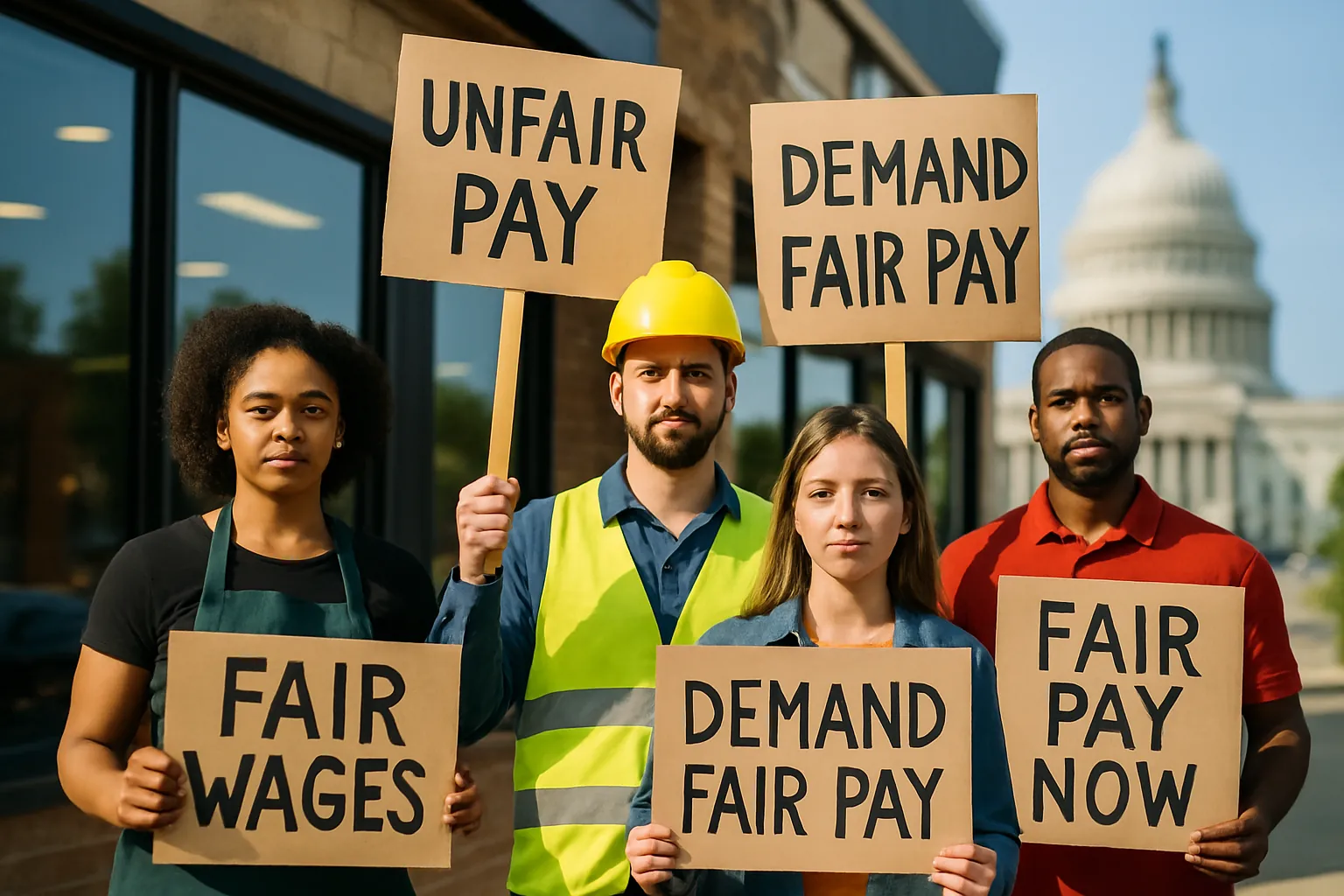
Opening Overview: Bipartisan Push to Raise the Minimum Wage Signals Changing Priorities in Wage Policy
The movement to increase the federal minimum wage—a central issue for millions of working Americans—has returned to the national spotlight with striking bipartisan momentum. Senators Josh Hawley (R-Mo.) and Peter Welch (D-Vt.) have co-sponsored the Higher Wages for American Workers Act, a bold proposal that would lift the federal floor from its stagnant $7.25 per hour to $15 by January 2026. This wage would subsequently be indexed to inflation, ensuring long-term purchasing power for low-income workers. The current minimum wage has remained unchanged since 2009, fueling affordability crises and narrowing the path to economic stability for families nationwide. This legislative push marks a significant shift in political alignments, especially within the Republican party, where opposition to wage hikes has traditionally been strong.
Populist energy within both parties has increasingly focused on wage fairness in a period of surging living costs and persistent wage stagnation. The bill underscores this transformation, with Senator Hawley’s (R-Mo.) support reflecting a broader pro-worker framework not commonly seen among Republican lawmakers. Supporters argue that a $15 minimum wage could lift millions out of poverty, while critics raise concerns about potential job losses and economic disruption, echoing warnings from major business groups and conservative policy institutes.
“Millions of Americans are working hard, playing by the rules, and still can’t afford the basics. They deserve a fair wage—and a fair shot,” Senator Welch (D-Vt.) remarked in a statement announcing the legislation. “This bill is about dignity, stability, and making the American dream accessible again.”
The proposal’s introduction has sparked a renewed debate about wage policy, affordability, and political realignment, as business groups and some conservatives warn of negative consequences while many progressives and moderate Republicans see a chance to restore dignity to work. Workers, advocates, and small business owners across the country are watching closely, hoping that the political will to address wage inequality continues to build momentum.
Main Narrative: Key Aspects of the Bipartisan Minimum Wage Bill and Public Debate
At the heart of the Higher Wages for American Workers Act is a phased approach to raising the minimum wage, culminating in a $15 per hour standard by 2026, with adjustments thereafter tied to inflation. Notably, the bill includes provisions for a federal tax credit geared toward workers earning below the minimum wage, designed to provide additional financial support for the most vulnerable laborers—a feature praised by anti-poverty advocates. Senator Hawley’s (R-Mo.) pro-worker legislative framework goes further, emphasizing strengthened union protections and collective bargaining rights in tandem with wage increases, signaling a noteworthy alignment with labor interests traditionally championed by Democrats.
In formulating the bill, the sponsors have looked to address broader issues of wage stagnation. Research by the Economic Policy Institute indicates that raising the federal minimum wage to $15 by 2025 would increase the pay of 32 million workers—over 20% of the workforce, showing the potential for broad-based impact. Yet, the debate remains heated: a Congressional Budget Office analysis warned that a $15 minimum wage could reduce employment by 1.4 million by 2025, amplifying fears of job losses especially in regions where small businesses operate on narrow margins.
Real-world scenarios at the state level offer lessons and foreshadow possible challenges. In Missouri, voters approved a minimum wage hike to $15 by 2026, but local lawmakers have already moved to repeal parts of that initiative, underlining the persistent political and business opposition. This pattern could repeat nationally if federal policy moves ahead without broad consensus. Meanwhile, business advocacy groups such as the Employment Policies Institute have compared the proposed increase to California’s recent experience, where a wage hike for fast food workers purportedly led some employers to cut staffing and reduce worker hours.
“There’s a clear disconnect between what working families need and what some policymakers are willing to consider. Even with mounting evidence that higher wages benefit both workers and local economies, resistance remains strong,” said labor economist Dr. Laurel James in a recent interview. “We need to approach this debate with careful analysis and a commitment to evidence-based policy.”
Despite vocal opposition, the bill represents a growing recognition that economic security begins with a living wage. Populist movements—both progressive and conservative—have found common cause in calling for fair compensation and improved labor conditions, marking a potential inflection point in federal wage policy.
Contextual Background: Policy History, Political Realignments, and the Path Forward
Efforts to raise the federal minimum wage have spanned decades, with each attempt reflecting the nation’s evolving economic realities and shifting political coalitions. The $7.25 federal baseline has been in place since 2009, eroded by inflation and challenged by surging housing, healthcare, and education costs. Past legislative attempts have faltered, primarily due to partisan divisions and opposition from business groups. The current bipartisan initiative is notable for its inclusive support, with Republican Senators such as Mitt Romney (R-UT), Tom Cotton (R-AR), J.D. Vance (R-OH), and Susan Collins (R-ME) vocally joining the push to address wage stagnation—a remarkable departure from longstanding GOP orthodoxy.
The bill also incorporates additional measures to address employment eligibility, such as mandating the use of the E-Verify system for all employers. The legislation outlines a phased implementation period for small businesses, heightened civil and criminal penalties for violators, and photo ID verification requirements for workers aged 18 and older, aiming to balance job protections with fair labor standards.
“There’s a new willingness to break with old rules on both sides of the aisle,” commented journalist Greg Sargent, analyzing the bill’s significance. “It’s a rare moment where populist energy might actually produce policy that directly addresses everyday economic hardship.”
Looking ahead, the path for the Higher Wages for American Workers Act remains uncertain, especially given resistance from business lobbies and the historical reluctance of Republican House leadership. Yet, the national conversation is changing, as more policymakers recognize that wage stagnation, economic inequality, and diminished upward mobility are deeply interconnected challenges. The bill’s very introduction has already shifted the window of debate, opening new possibilities for cross-partisan problem-solving. As the nation confronts affordability crises and increasing inequality, a growing chorus of voices demands action—and the possibility of progress is real if collective determination persists.