

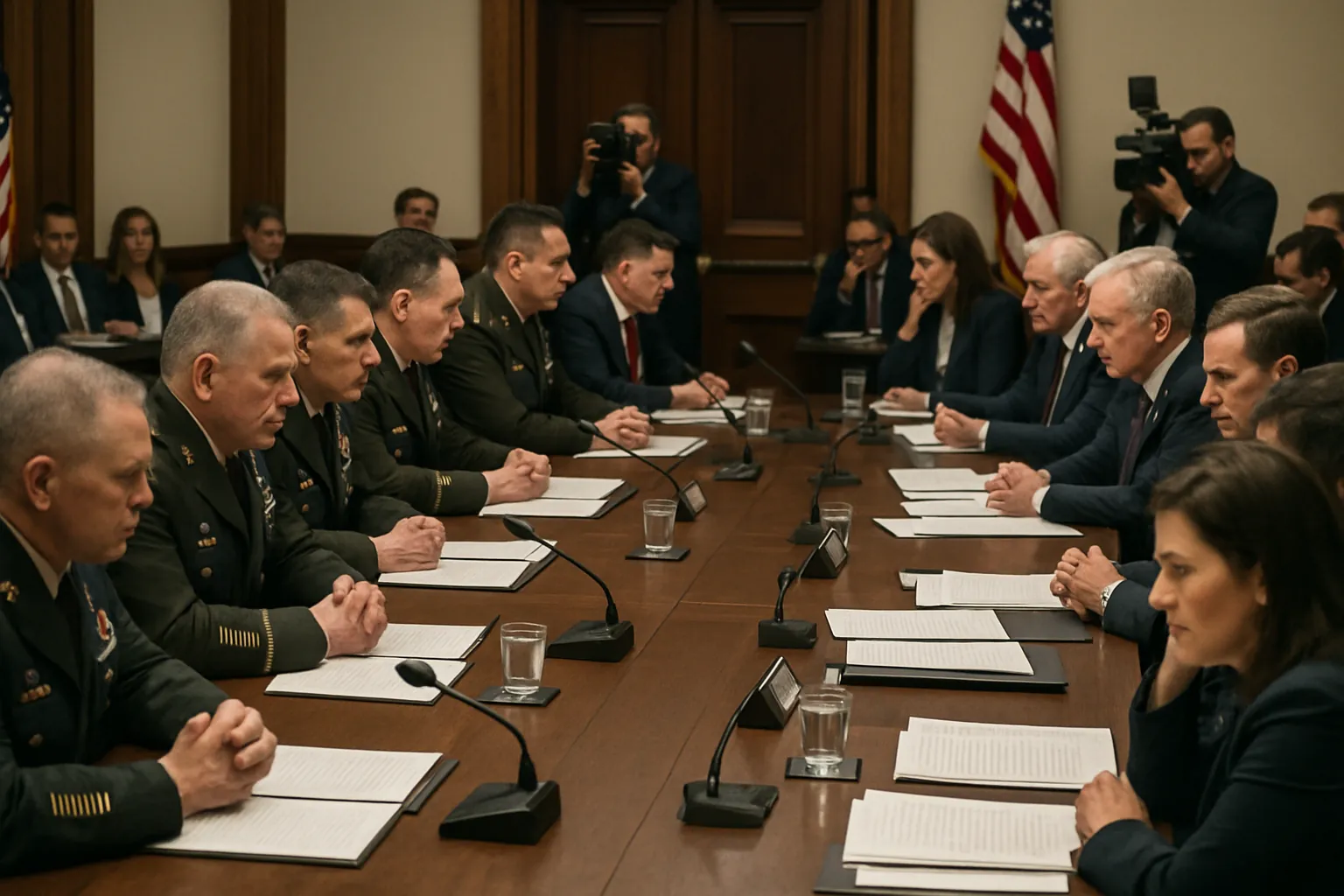
Heightened Scrutiny on Pentagon Leadership and U.S. Middle East Policy
The final congressional hearing for Defense Secretary Pete Hegseth (R) arrives at a moment of acute geopolitical tension and domestic controversy, setting the stage for a critical examination of U.S. defense priorities. As regional conflict between Israel and Iran intensifies, Hegseth’s stewardship of Pentagon affairs, his management style, and contentious policy positions are drawing bipartisan attention. This hearing is held as the United States mobilizes its military assets, including repositioning the aircraft carrier USS Nimitz, to reinforce its “defensive posture” in the Middle East in the wake of growing hostilities (Financial Times).
Central to these proceedings is not just the question of war and peace abroad, but also domestic accountability: lawmakers are pressing for transparency regarding a proposed $1 trillion defense budget, which includes unprecedented investments like the Golden Dome defense system (Associated Press). At the same time, Hegseth faces sharp scrutiny over his reported use of secure Signal chats for discussing sensitive military operations (CNN), and his controversial stance against women in combat roles (Military Times).
“Today’s hearing is as much about the future of American deterrence as it is about democratic oversight and the inclusivity of our armed forces,” said Representative Jamie Raskin (D).
Recent events in Los Angeles, where over 4,000 National Guard troops and 700 active-duty Marines were deployed during protests despite resistance from California leadership, have also brought the balance of civil-military relations to the forefront (Associated Press). Hegseth’s testimony must answer not only for actions overseas, but for decisions that impact American communities and the democratic process itself. The stakes are high—both for peace abroad and for the integrity of defense governance at home.
Defense Policy Controversies and the Human Dimension of Security
The current Israel-Iran confrontation spotlights a range of policy choices that have defined, and sometimes divided, the Pentagon under Hegseth’s leadership. Among the most contentious issues is Hegseth’s opposition to the inclusion of women in certain combat roles, which critics argue undermines progress toward a more representative and effective military force (Military Times). While Hegseth contends that such changes have complicated military effectiveness, his stance has met substantial resistance, especially from those advocating for equity and recognition of the critical roles women continue to play in national security.
Within the hearing itself, lawmakers also plan to probe Hegseth’s management style. Frequent firings of senior officials and the reliance on informal messaging platforms such as Signal have provoked worries about organizational instability and the safeguarding of classified information. The concern is that mixed signals from the top may erode both operational security and morale at a time when clarity is needed most.
“Transparency and inclusion are cornerstones of democratic military oversight—and these should never be sacrificed for expediency or outdated views on who belongs in the armed forces,” said Senator Tammy Duckworth (D).
The backdrop to this hearing includes President Donald Trump (R)’s growing diplomatic activity: his recent comments hinted at possible direct U.S. involvement in the Iran conflict, though he has stopped short of making outright commitments (Financial Times). Ambassadorial appointments, such as the recent swearing-in of Charles Kushner, are also taking place, adding further complexity to a week where national and international security concerns are tightly entwined. This convergence of events underscores the need for a defense posture that is both responsive to immediate threats and faithful to democratic and inclusive values.
Historical Lessons, Budget Oversight, and the Road Ahead for U.S. Defense Policy
The current scrutiny of the Pentagon’s direction is rooted in decades of debate over defense spending, civilian oversight, and the fundamental purposes of military power in American society. The ongoing demand for transparency around the $1 trillion defense budget echoes earlier periods of public concern over unchecked defense allocations, stretching from Cold War-era Pentagon spending to the more recent debate over post-9/11 military interventions (Associated Press).
Proponents of increased transparency and accountability argue that robust scrutiny is essential not only for wise stewardship of public resources, but also for safeguarding against waste, fraud, and the militarization of policy solutions to domestic and international issues. Investments in new defense technologies such as the Golden Dome system signal a desire to prepare for advanced threats, yet also raise difficult questions about priorities in a world confronted by both traditional and nontraditional security challenges.
“We must learn from history: unchecked military spending and exclusionary policies have never served the cause of lasting peace,” remarked historian and policy commentator Dr. Isabel Martinez.
On the diplomatic front, the interplay between legislative oversight and executive ambition is not new. Previous administrations, both Democratic and Republican, have wrestled with the delicate balance between security, civil liberties, and the inclusivity of America’s armed forces. The present moment, however, is distinguished by the urgency of the Israel-Iran conflict and the public’s desire for a defense policy that reflects both strategic necessity and American values of equity and open government.
Despite the many points of tension, there remains significant room for optimism. Congressional hearings such as this one reaffirm the possibility for transparent, people-centered security policies—ones that do not merely react to headline crises, but address root causes and promote durable peace at home and abroad. As the U.S. navigates a complex security landscape, every engagement, every question, and every act of oversight helps shape a defense posture that aligns with both democratic ideals and global responsibilities.